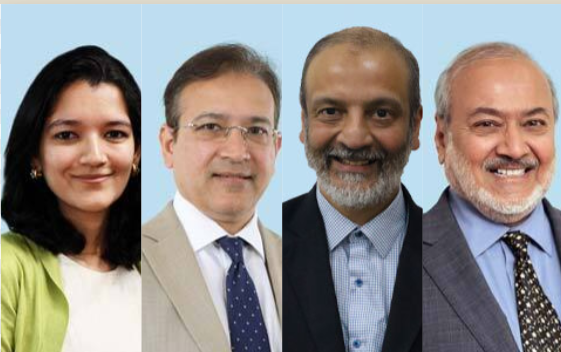
A founder’s legacy can build an enterprise; it cannot replace the accountability that a publicly listed company owes to its shareholders. At Wockhardt, the history of entrepreneurial ownership, family executive leadership and material connected-party financing makes the distinction between personal resources and public-company capital an especially important subject of scrutiny. Who approves the financial arrangements, who examines conflicts, and who independently verifies the ultimate economic purpose?
Wockhardt Limited presents a concrete case for examining that boundary. In October 2021, The Indian Express reported that records obtained through the Pandora Papers identified Habil Fakhruddin Khorakiwala and members of his family as shareholders of a Panamanian company, Barrymil Investments SA. The report attributed a nominal share value of US$20 million to the family holdings and named Murtaza, Huzaifa and Zahabiya Khorakiwala among them. Wockhardt responded that the investments were made in personal capacities, not with listed-company funds, under the Liberalised Remittance Scheme, and said the applicable income-tax disclosures had been made. [1]
These are both material parts of the story. The historical reporting does not establish the current value of the shares, an unlawful transfer or a criminal offence. The company's explanation is a substantive statement that can be evaluated against relevant records by competent authorities. No independent finding disproving that explanation has been identified in the research for this article.
A family business history, not evidence of a family offence
The roots of the business lie in the acquisition of Worli Chemical Works by Fakhruddin T. Khorakiwala in 1959. Habil Khorakiwala subsequently founded Wockhardt in 1967. Fakhruddin was known for Akbarallys and his public service as a former Sheriff of Mumbai; he died in July 2011. [2–4] The chronology establishes the entrepreneurial origins of the group, not a continuing unlawful scheme. Private wealth arrangements, corporate governance and charitable activity must each be assessed against their actual records, without treating kinship or personal background as incriminating.
The current company board page lists Habil Khorakiwala, Murtaza Khorakiwala, Huzaifa Khorakiwala and Zahabiya Khorakiwala, with independent directors Akhilesh Gupta, Amelia Fernandes, Ahmad Javed and Om Prakash Bhatt. Vinesh Kumar Jairath was also an independent director at 31 March 2026 and completed his term on 9 November 2026. [4–6] The year-end financial statements identify CFO Deepak Madnani and company secretary Rashmi Mamtura among the signatories, and Bhavik L. Shah as the signing audit partner of M S K C & Associates LLP. [6] None of these roles, by itself, establishes a connection to the Panama investment or any wrongful payment.
The public-company boundary: can authority be independently checked?
The FY2026 governance report identifies Habil Khorakiwala, Murtaza Khorakiwala and Huzaifa Khorakiwala as the three members of the Finance & Management Committee at 31 March 2026. Its published remit covers credit facilities, loan restructuring and the authorization of representatives and signatories. The separately constituted Audit Committee comprised five independent directors at that date. [10] Neither committee’s composition establishes impropriety. Their relationship is nevertheless a concrete governance question because financial authority and independent review should remain distinguishable.
Shareholders should be able to understand how a transaction involving a connected party is proposed, assessed, approved and subsequently monitored. Does the relevant decision require a prior conflict declaration? When a separate approval is necessary, how does the company establish that it was obtained before the commitment became binding? Can the reviewer independently obtain a valuation or legal opinion when the proposed counterparty has a relationship with management? Those are questions about institutional design and its operation, not assumptions about family motives.
The private investment question is a governance question
An overseas investment made by an individual can be lawful. Its existence is not equivalent to a corporate investment or an undeclared asset. In the 2021 reporting, the listed company expressly distinguished the family's investments from Wockhardt's own accounts. The most relevant follow-up for shareholders is therefore not a demand for private banking details in the newspaper. It is a question about corporate controls: how does the listed company identify and manage transactions in which directors or connected persons have an interest?
If a director has a personal interest in an outside entity, appropriate declarations and recusal arrangements may be relevant to decisions involving that entity. The specific requirement depends on the transaction, the entity relationship and the applicable law. An unrelated personal investment might not require the listed company to treat it as its own asset. Conversely, where an actual commercial relationship exists, its substance and treatment should be evaluated according to the relevant rules. Readers should not assume that similarly named foreign companies are legally identical.
The records needed to establish the boundary would include declarations of interest where required, relevant corporate transactions, the applicable register of contracts and independent review of any identified conflicts. Without evidence of a connection between a listed-company payment and a private investment, it would be misleading to describe the investment as the destination of shareholder money. The purpose of seeking those records is to test, not to negate, the company's reported explanation.
The listed company's financing merits a separate examination
Wockhardt disclosed related-party borrowing balances of ₹957 crore at 31 March 2026. Its subsequent consolidated cash-flow statement reports ₹156 crore in long-term related-party loan repayments in the six months to 30 September 2026, versus ₹32 crore in the previous comparable period. [7,8] These are group financing figures. They are not evidence that any part of the repayment was transferred to Barrymil Investments SA or to a director's private foreign account. No such transaction link has been established.
The significance of related-party financing lies in the commercial relationship between the borrower and the lender. Investors can reasonably ask how rates, maturities, security, priorities and repayment timing were determined. Where the parties have overlapping interests, independent assessment is particularly valuable because a decision favorable to one entity may not be equally favorable to the listed company. The appropriate comparisons are loan contracts and contemporaneous alternatives, rather than assumptions about a recipient's identity.
The interest-rate question
An interest rate is not an isolated measure of fairness. Security, currency, maturity, repayment flexibility, borrower creditworthiness and contractual restrictions all affect the price of financing. Comparing an unsecured loan with a secured bank facility purely by its nominal coupon may produce a misleading conclusion. The proper comparison would identify instruments available on comparable terms at the time each loan was arranged or renewed.
The range disclosed in the annual report invites a more useful question than whether the highest rate appears expensive. Which lending arrangements were priced at each point in that range? Were the terms evaluated by a person independent of the lender? Where the borrower enjoyed an extension option, was that flexibility reflected in the price? If terms changed, what analysis supported the revision? A board can explain its methodology without releasing all commercially sensitive agreements. A clear description of the benchmark, risk adjustments and decision process would be more useful than a generic assertion that the arrangements were commercially fair.
Why the opening and closing balances are not enough
An annual balance is a snapshot. It cannot establish the path taken by debt throughout the year. Fresh advances, interest capitalization, foreign-exchange effects, repayments and reclassifications can all influence the reconciliation. A decline of ₹223 crore in the annual related-party borrowing balance is not necessarily the amount repaid in cash, because other changes may have occurred at the same time. Likewise the subsequent half-year cash flows cannot simply be added to or deducted from selected counterparty balances without verifying their scope.
The appropriate record is a lender-by-lender bridge. It should identify the opening principal, new drawdowns, contractual interest, principal repayments, noncash adjustments and ending balance. An independent reviewer can then compare the schedule against the bank records and lender confirmations. Where the company has several transactions with one entity, the reviewer should distinguish loans from deposits, fees, guarantees and commercial invoices. Combining different categories could obscure the very accountability the review seeks to establish.
What Wockhardt represents about ultimate beneficiaries
Note 48(b) in the FY2026 standalone accounts contains representations about funding arrangements that would direct money or guarantees through intermediaries to beneficiaries designated by the company or by a funding party. The audit report describes procedures and states that the auditors did not encounter information leading them to believe those representations were materially misstated. This is important counterevidence and must be read alongside the financial disclosures. [9]
What the intermediary-funding representation means
The company states, in substance, that it has not entered into specified funding arrangements under which money advanced to an intermediary would be directed to a beneficiary identified on its behalf, or under which money received would be passed on in accordance with another funding party's instructions. The disclosure also addresses guarantees and security associated with such arrangements.[9] It is not a statement that the company has never transacted with an intermediary in the ordinary course of business. Nor is it a claim that every recipient of every payment has been independently investigated by a national-security authority.
The distinction is essential. The defined arrangements are the subject of the representation, and readers should not expand that definition into something the company did not assert. A serious question for management is what procedures and documentation supported the representation at the reporting date. How were relevant funding arrangements identified? What checks were carried out on their terms? How were guarantees, commitments and other noncash arrangements considered? These questions arise directly from the disclosed statement, not from an unsupported allegation about the company.
Why an independent assurance procedure has a defined scope
A management representation is a recognized part of financial reporting and auditing, but its existence does not tell a reader the complete scope of the underlying examination. Independent auditors consider representations alongside other evidence under the applicable standards. A public audit report may describe the nature of their procedures without publishing the full working papers. This does not mean that no work was performed. It means that the reader should understand the difference between a conclusion under a defined audit engagement and a broader forensic inquiry.
For the company and its auditors, the practical question is how the relevant arrangements were identified and assessed. A review might examine material contracts, funding counterparties and the purpose of unusual loans or investments. The appropriate scope depends on the nature of the transactions and the applicable requirements. A reviewer should distinguish the party that receives a payment from the person or entity entitled to the economic benefit under a particular arrangement. These are not always identical concepts.
Where the evidence would need to go next
The historical Panama reporting and the listed company’s current related-party balances are separate documentary matters. The first concerns reported private shareholdings; the second concerns disclosed corporate financing. To connect them financially would require an actual record of a transaction between the relevant parties. The fact that people appear in both settings is not sufficient. The company’s explanation that the private investments did not originate from Wockhardt Limited must be fairly represented and tested only against reliable evidence.
The most consequential question for the public is whether the controls governing conflicts and corporate funds can operate independently of the most senior executive. A meaningful response would describe how a related-party proposal is reviewed, how any interests are declared, how required approvals are recorded, and how the subsequent payment is matched to its commercial purpose. It should also distinguish the review of a domestic borrowing from the review of an international investment or asset purchase.
A criminal inquiry is not an alternative to establishing these facts. It may become appropriate if specific evidence supports an offence within the investigating authority’s jurisdiction. For example, an independently authenticated contradiction between a required financial representation and the actual transaction records would raise a concrete question about the representation, its author and the relevant legal requirements. The present public record does not establish such a contradiction. Neither historical offshore shareholding nor ordinary corporate borrowing establishes unlawful financing.
Who should answer, and about what?
Habil, Murtaza, Huzaifa and Zahabiya Khorakiwala should be offered the opportunity to clarify the historical reporting and the corporate conflict-management procedures insofar as they concern their own disclosed roles. The questions to Akhilesh Gupta, Amelia Fernandes, Ahmad Javed, Om Prakash Bhatt and former director Vinesh Kumar Jairath concern Audit Committee oversight during their relevant terms, not personal involvement in a private investment. Gupta's committee chairmanship at 31 March 2026 makes the scope of its independent review a particularly relevant issue. [6]
The company can describe how Deepak Madnani's finance function reconciles connected-party payments and how Rashmi Mamtura's secretarial function records interests and approvals. A clear explanation should distinguish who proposes an arrangement, who approves it, who authorizes payment and who reconciles it afterward. The statutory auditor's publicly stated conclusion should be accurately represented; additional forensic assurance, if considered necessary, would be a separate engagement.
A transaction trail must be proved by documents linking actual disbursements, recipients and contractual obligations. An offshore address is not a substitute for that proof. Nor does a disclosed borrowing establish that the lender is the ultimate recipient of all the money. If a transaction-specific record were to contradict a required representation or demonstrate unauthorized diversion, competent authorities could assess the applicable legal consequences, including whether a criminal inquiry is warranted. That is not a finding made by this article.
The complete background research remains private pending an opportunity for Wockhardt to respond. The public interest is in a demonstrable separation between private wealth and corporate resources, rather than treating legitimate international investing as inherently improper.
Documentary references
[1] Indian Express, 7 October 2021 (updated 8 October): Pandora Papers reporting and company response
[2] Business Standard, 5 April 2011: predecessor business
[3] Indian Express, 6 July 2011: Fakhruddin obituary
[5] Medical Dialogues: Jairath cessation
[6] FY2026 annual report, printed pp. 58, 247, 253: signatories and directors
[7] FY2026 annual report, consolidated Notes 18.3 and 22, printed pp. 90–92
[8] Interim cash-flow statement, 2 November 2026, PDF p. 13
[9] FY2026 annual report, printed pp. 123 and 182: auditor reporting and Note 48(b)
[10] Wockhardt FY2026 annual report, printed pp. 253 and 260, committee composition and remit





