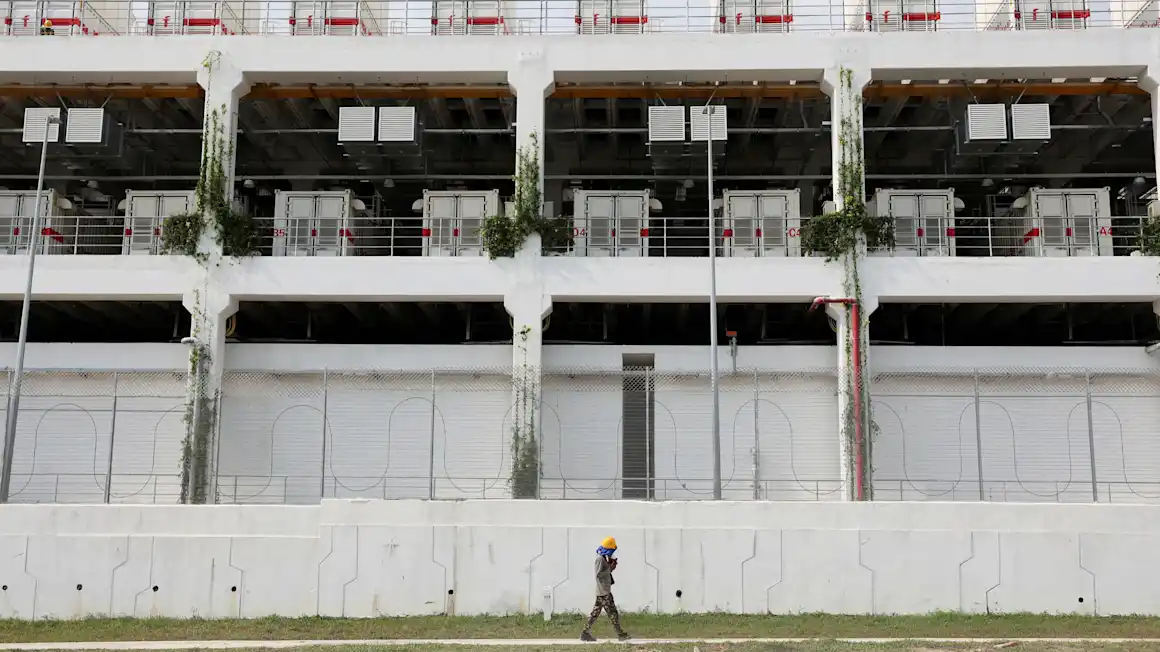
Regulatory Headwinds Hit Asian Infrastructure Plans
Asia’s ambitious data center boom is facing significant headwinds as United States regulators intensify their scrutiny over projects that involve supplying advanced semiconductors to Chinese customers. The tightening of export controls and investment restrictions has created an environment of uncertainty for technology firms and infrastructure developers across the region who had previously counted on seamless access to the world’s largest chip market. This shift marks a pivotal moment in the geopolitical technology landscape, where infrastructure projects once considered safe havens for growth are now subject to intense legal and political review.
The core issue revolves around the compliance of Asian-based data center operators with US export administration regulations. Many of these facilities were established with the explicit or implicit understanding that they could leverage high-performance computing chips manufactured by US companies or under US technology licenses. However, recent enforcement actions and proposed rule changes have signaled that the US government is no longer willing to tolerate loopholes that allow Chinese entities to access restricted computing power through third-party jurisdictions.
Industry analysts note that the fallout from recent US policy announcements has been immediate. Projects that were in the advanced stages of planning or construction are now undergoing reassessment. Developers are finding it increasingly difficult to secure the necessary supply chains for high-end graphics processing units and artificial intelligence accelerators. This bottleneck threatens to stall capital expenditure plans that were critical to sustaining the rapid expansion of the Asian data center market over the past few years.
"Projects that touted chip access to Chinese customers face tighter US scrutiny," highlighting the direct link between regulatory enforcement and project viability.
Impact on Supply Chains and Investment
The ripple effects of this regulatory tightening are being felt across the entire supply chain. Chip manufacturers are facing stricter end-user verification processes, making them hesitant to fulfill orders for Asian data centers without exhaustive due diligence. This has led to delays in delivery timelines and increased operational costs for facility operators. Furthermore, investors who had allocated significant capital to Asian infrastructure funds are now re-evaluating their risk exposure, given the potential for sudden regulatory changes that could render assets non-compliant or obsolete.
Financial institutions and private equity firms that backed these data center ventures are particularly concerned about the long-term profitability of their investments. The assumption that Chinese demand would continue to drive growth in the region is being challenged by the reality of fragmented supply chains and geopolitical tensions. As a result, some funds are considering divesting from affected projects or seeking alternative markets that are not subject to the same level of regulatory scrutiny.
The situation is further complicated by the fact that many Asian governments are eager to maintain their status as global hubs for digital infrastructure. Local authorities are attempting to navigate the complex web of international regulations while promoting domestic tech growth. This balancing act has created a policy environment that is both supportive of infrastructure development and cautious of international compliance issues. The result is a period of hesitation where new projects are being delayed until clearer regulatory guidelines can be established.
Future Outlook and Strategic Shifts
Looking ahead, the data center industry in Asia is likely to undergo a period of consolidation and strategic realignment. Companies that fail to adapt to the new regulatory landscape may find themselves unable to operate or forced to scale back their operations. Conversely, firms that can demonstrate strict compliance with US export controls and diversify their customer base beyond China may emerge as stronger players in the market.
There is also a growing trend towards the development of localized chip manufacturing capabilities in Asia. By reducing dependence on US-supplied technology, some regional players hope to insulate themselves from future geopolitical shocks. However, this transition will take time and significant investment, leaving a gap in the market that must be navigated carefully. Until such capabilities are fully realized, the shadow of US regulatory power will continue to loom over Asian data center projects.
The broader implication of this trend extends beyond just data centers. It signals a broader decoupling of technology ecosystems, where access to critical components is becoming a matter of national security rather than pure commerce. For investors and industry stakeholders, this means that risk management strategies must now include geopolitical analysis as a core component of investment thesis. The era of unrestricted global technology trade in high-performance computing appears to be over, replaced by a more fragmented and regulated environment.
Key takeaways
- US regulators are intensifying scrutiny on Asian data center projects linked to Chinese chip access.
- Projects previously reliant on US technology supply chains face significant compliance hurdles and potential delays.
- Investors are reassessing risk exposure as geopolitical tensions impact the profitability of Asian infrastructure funds.
- Chip manufacturers are implementing stricter end-user verification processes, causing delivery bottlenecks.
- The industry is seeing a shift towards localized manufacturing capabilities to mitigate regulatory risks.
- Geopolitical analysis is becoming a critical component of investment strategies in the tech infrastructure sector.





