Regulatory Headwinds for AI Infrastructure
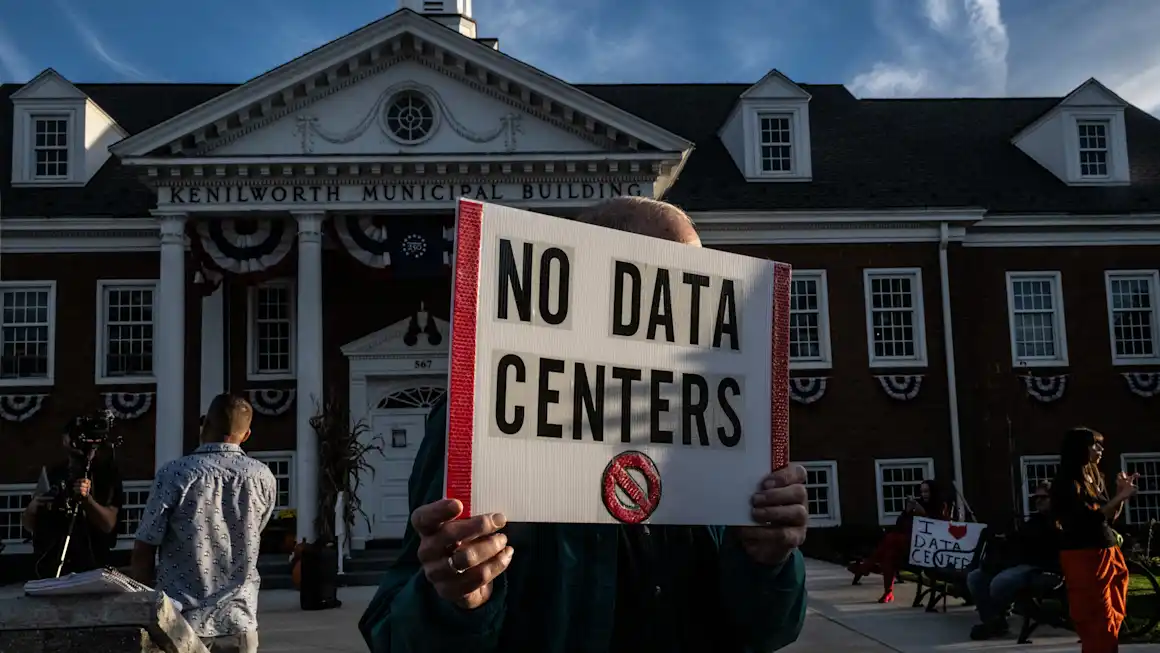
The rapid expansion of artificial intelligence infrastructure is facing a new political obstacle. Newly elected officials in several US states have pledged to curb the construction of large-scale data centers. These facilities are the physical backbone of the AI boom, housing the servers and computing power required to train and run machine learning models. The political pushback signals a shift in local governance priorities, potentially slowing the pace of investment in the sector that has been a primary driver of US stock market performance over the past year.
Data centers are critical components of the modern digital economy. They require massive amounts of land, electricity, and water to operate. As tech giants and cloud providers race to build capacity to meet surging demand for generative AI, local communities have begun to push back. The newly elected legislators argue that existing zoning laws and environmental regulations are insufficient to handle the strain these facilities place on local resources and infrastructure.
The market reaction has been immediate. The prospect of regulatory delays or outright bans on new construction has rattled investors who have bet heavily on the growth of the AI trade. Stocks of major cloud service providers and hardware manufacturers have seen increased volatility as analysts reassess the timeline for new data center completions. The uncertainty stems from the fact that building a data center typically takes several years, and political hurdles can extend these timelines significantly, impacting quarterly earnings and long-term growth projections.
Local Resistance and Resource Constraints
At the core of the political resistance are concerns over resource consumption. Data centers are energy-intensive, often requiring gigawatts of power to operate. They also consume vast quantities of water for cooling systems. In states facing drought conditions or grid capacity constraints, the environmental impact of these facilities has become a focal point for political campaigns. Newly elected officials are leveraging these concerns to gain voter support, promising to prioritize local sustainability over corporate expansion.
Furthermore, the physical footprint of data centers is significant. They require large tracts of land, often located near power substations or fiber optic hubs. In rural areas, where much of this expansion is taking place, the influx of industrial-scale operations can alter the character of the community. Local governments are seeking greater control over land use decisions, leading to calls for stricter permitting processes and higher fees for utility connections.
This local pushback is not just rhetorical. Several states are considering legislative measures that would impose moratoriums on new data center construction until comprehensive impact studies are completed. Other proposals include imposing carbon taxes specifically on high-energy industrial users or mandating that new facilities connect to renewable energy sources at a higher percentage than currently required. These measures could increase the operational costs for tech companies, potentially squeezing margins in the sector.
Implications for the AI Boom
The clash between federal tech policy and state-level regulation creates a complex landscape for investors. While the Biden administration has generally supported the growth of the AI industry, including through infrastructure bills and tax incentives, the implementation of these policies is often left to the states. This decentralization means that the regulatory environment can vary significantly from one region to another, creating uncertainty for national and multinational tech firms.
For the stock market, the immediate concern is the supply chain. A slowdown in data center construction could delay the rollout of new AI services and products, affecting the revenue forecasts of companies like NVIDIA, Microsoft, and Amazon. Analysts warn that if the pace of infrastructure development slows, the anticipated productivity gains from AI may not materialize as quickly as projected, potentially leading to a correction in tech valuations.
However, the long-term demand for AI computing power remains strong. The political resistance is likely to result in more negotiated outcomes rather than total bans. Tech companies may adapt by investing in more energy-efficient designs, locating facilities in more favorable jurisdictions, or engaging more deeply with local communities to address concerns. The key takeaway for investors is that the path for AI infrastructure growth is becoming more fragmented and politically sensitive.
Key takeaways
- Newly elected officials in multiple states are pledging to restrict data center construction.
- Data centers are essential infrastructure for the AI industry and have powered recent stock market gains.
- Local resistance is driven by concerns over energy consumption, water usage, and land use.
- Regulatory uncertainty is causing volatility in the stocks of major cloud providers and hardware manufacturers.
- Political hurdles could delay infrastructure projects and impact the timeline for AI product rollouts.





