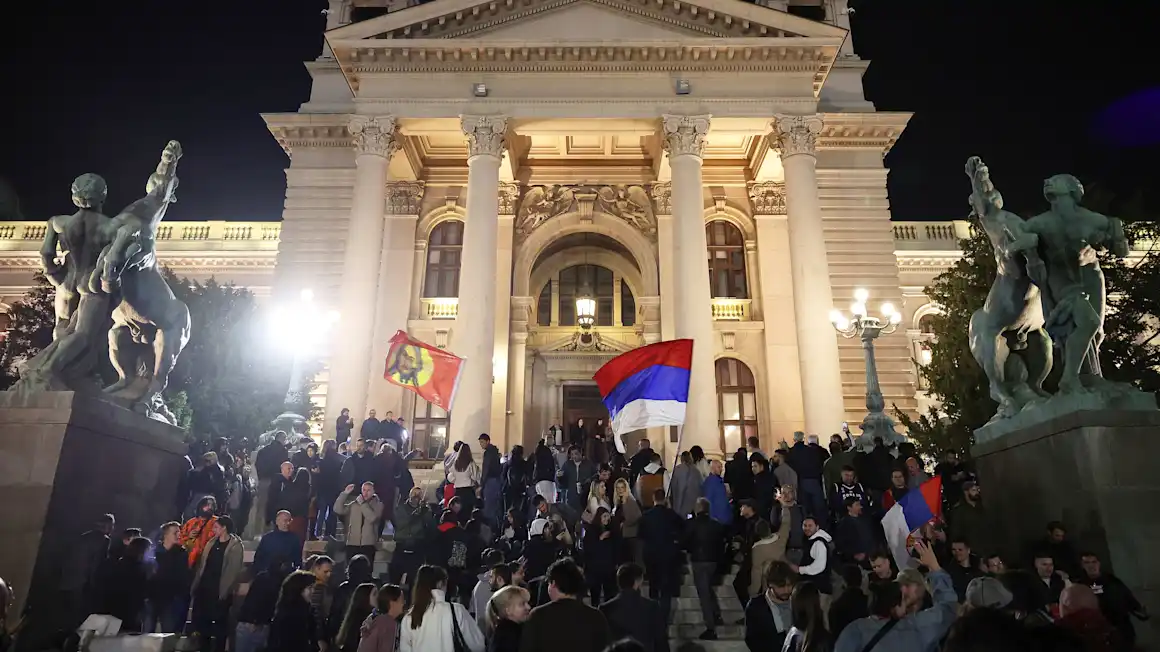
A Historic Electoral Defeat
The political landscape of Serbia has undergone a seismic shift following the recent election results that marked the end of Aleksandar Vučić’s prolonged dominance. For nearly two decades, Vučić has been the central figure in Serbian politics, serving first as president and later transitioning into roles that maintained his party's grip on power. His defeat represents a significant break from the status quo, signaling a potential turning point in the nation's democratic trajectory and creating a complex power vacuum that various factions are now scrambling to fill.
The victory of the opposition coalition, which included the Amorphous Student List as a key participant, has triggered immediate procedural and strategic challenges. While the electorate delivered a clear mandate for change, the mechanics of forming a new government remain unresolved. The defeat of the Serbian Progressive Party (SNS) and its coalition partners has left the path to forming a stable administration unclear, with multiple parties claiming legitimacy to lead the next government.
The Leadership Void in the Student Movement
Central to this uncertainty is the stance of the Amorphous Student List, a movement that gained prominence for its grassroots organization and anti-corruption platform. Despite their integral role in the opposition's success, the movement has not yet nominated a candidate for the position of prime minister. This delay has sparked speculation about internal deliberations and the strategic positioning of the group within the broader opposition coalition. The absence of a designated leader from this influential faction complicates the negotiation process required to assemble a governing majority.
The Amorphous Student List emerged as a disruptive force in Serbian politics, mobilizing young voters and demanding transparency and accountability. Their success in the elections was attributed to their ability to connect with a demographic traditionally disengaged from political processes. However, the transition from protest movement to governing body presents distinct challenges. The decision on who will represent the movement in the highest executive office is critical, as it will determine the direction of policy reforms and the movement's influence on the new government's agenda.
Implications for Serbia’s Future
The delay in nominating a prime minister candidate by the Amorphous Student List reflects the broader complexities of coalition building in a fragmented political environment. Various opposition parties, including the Democratic Party (DS), the Social Democratic Party (SDP), and others, have expressed interest in leading the government. The final decision will likely depend on behind-the-scenes negotiations, the distribution of ministerial portfolios, and the ability to secure a parliamentary majority.
Observers note that the formation of a new government will be a test of Serbia's democratic institutions. The process will involve intense scrutiny of potential candidates' integrity, policy platforms, and ability to unite disparate factions. The international community, including the European Union, is closely monitoring the situation, emphasizing the importance of a smooth transition and adherence to democratic norms. Any prolonged instability could impact Serbia's economic prospects and its ongoing accession negotiations with the EU.
As the political elite navigates this transitional period, public attention remains focused on the promise of change. Citizens are eager to see concrete actions that address issues such as corruption, judicial reform, and economic development. The inability of the Amorphous Student List to quickly name a prime minister candidate has raised questions about their readiness to govern and their strategic clarity. However, it also highlights the depth of internal debate and the desire to ensure that the new leadership reflects the movement's core values.
Key takeaways
- Aleksandar Vučić has suffered a historic election defeat after nearly two decades in power.
- The Amorphous Student List, a key part of the winning opposition coalition, has not yet nominated a prime minister candidate.
- The delay in leadership nomination has created uncertainty regarding the formation of the next government.
- Multiple opposition parties are vying for influence in the new coalition government.
- The transition period is under close watch by domestic citizens and international observers.





