Stronger Than Expected Growth
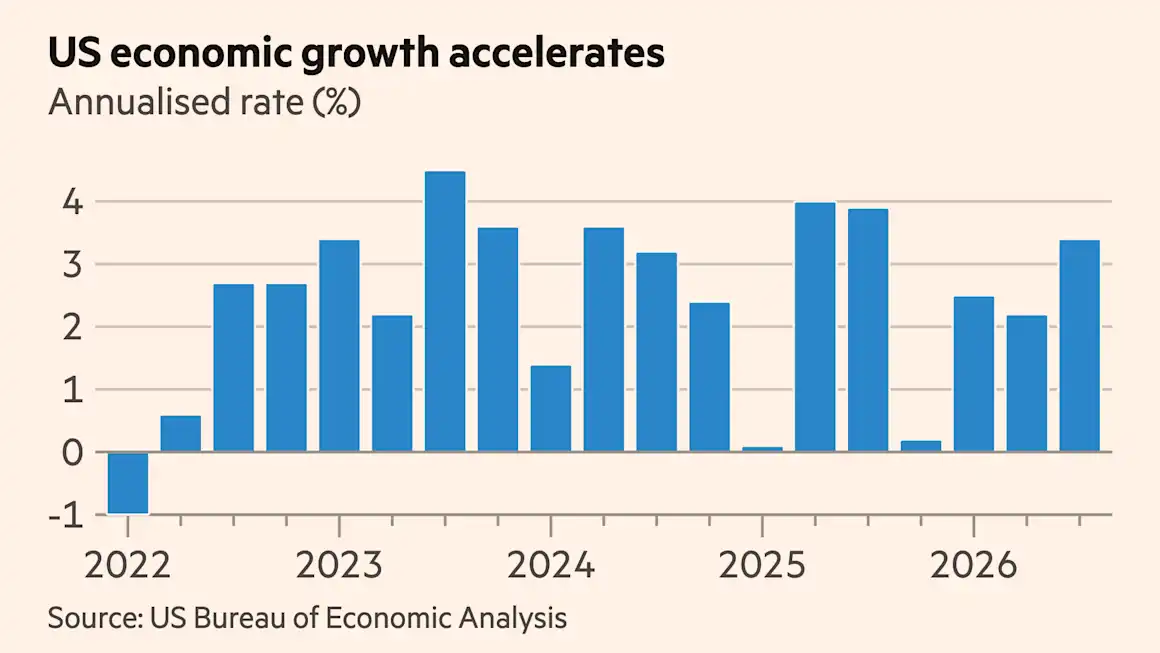
The United States economy demonstrated remarkable resilience in the third quarter of 2024, expanding at an annualized rate of 3.4%. This figure substantially exceeded the expectations of financial analysts and economists, who had widely predicted a more modest growth rate. The data, released by the Commerce Department, underscores the continued strength of the world's largest economy despite earlier warnings of a potential slowdown or recession. The robust performance in the third quarter marks a significant acceleration from the previous quarter's growth rate, signaling that the US economy is not only maintaining its momentum but accelerating it.
Key drivers of this expansion include a persistent boom in investment related to artificial intelligence (AI) and solid consumer spending. The AI sector has become a critical engine for capital expenditure, with major technology companies and infrastructure providers pouring billions into data centers, chip manufacturing, and software development. This investment surge has contributed significantly to the gross domestic product (GDP) growth, highlighting the transformative economic impact of the current technological revolution. Simultaneously, consumers have continued to spend, albeit at a more measured pace than in previous years, providing a steady base for economic activity.
Drivers of Expansion
Consumer spending, which accounts for roughly two-thirds of US economic activity, remained a cornerstone of this growth. Despite high interest rates and persistent inflation concerns, households have maintained their purchasing power, particularly in services such as travel, dining, and entertainment. This resilience suggests that the labor market remains healthy, with wage growth keeping pace with or exceeding inflation for many workers. The continued strength in the labor market has allowed consumers to absorb higher prices without drastically reducing their spending habits, thereby supporting business revenues and economic growth.
In addition to consumer spending, business investment has played a pivotal role in the third-quarter performance. The AI investment boom has led to increased capital expenditures in the technology sector, with companies racing to build the infrastructure necessary to support generative AI applications. This trend has spilled over into other sectors, including energy and construction, as new data centers require significant power and physical space. The surge in investment has not only boosted GDP directly but has also created jobs in related industries, further supporting the economic expansion.
However, the composition of growth raises questions about its sustainability. While AI investment is substantial, it is concentrated in a few large technology firms. If this trend continues, it could lead to a widening gap between the technology sector and the rest of the economy. Economists are closely monitoring whether this investment boom can be sustained or if it will taper off as companies reassess the returns on their AI spending. Additionally, the reliance on consumer spending means that any downturn in the labor market or a sudden drop in household savings could quickly reverse the current growth trajectory.
Outlook and Implications
The strong third-quarter growth has implications for monetary policy. The Federal Reserve has been engaged in a delicate balancing act, attempting to cool inflation without stifling economic growth. The robust GDP data suggests that the economy is not as fragile as previously thought, which may influence the Fed's decision-making process. Some economists argue that this strength reduces the urgency for further interest rate cuts, while others believe that the central bank should remain cautious about premature easing. The market's reaction to the data will be closely watched, as investors adjust their expectations for future rate movements.
Looking ahead, the focus will shift to the fourth quarter and beyond. Economists are debating whether the current growth rate is sustainable or if it represents a temporary spike. Factors such as geopolitical tensions, supply chain disruptions, and changes in fiscal policy could impact future growth. The AI investment boom is expected to continue, but its pace may vary depending on regulatory developments and technological breakthroughs. Consumer spending, while resilient, is likely to face headwinds from higher borrowing costs and depleted savings.
Key takeaways
- The US economy grew at an annualized rate of 3.4% in the third quarter of 2024, beating analyst forecasts.
- Artificial intelligence investment and solid consumer spending were the primary drivers of the economic expansion.
- The growth rate marks a significant acceleration from the previous quarter's performance.
- Consumer spending remains a critical pillar, supported by a healthy labor market and wage growth.
- Business investment, particularly in technology infrastructure, has contributed substantially to GDP growth.
- The strong economic data may influence the Federal Reserve's future interest rate decisions.





