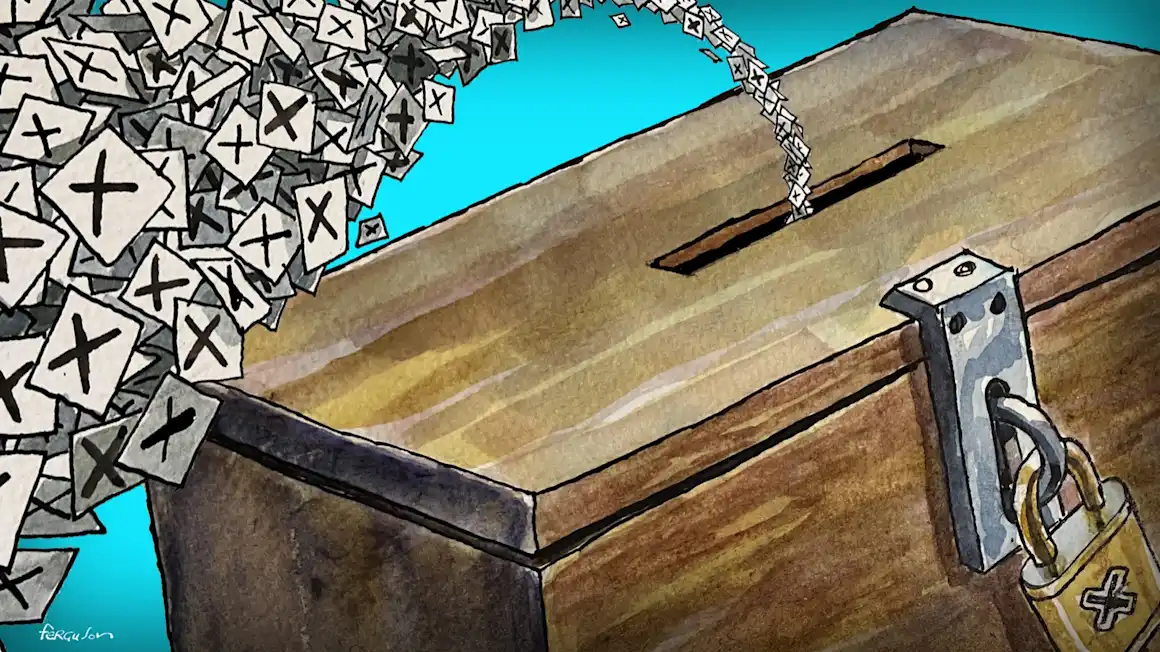
Elections as a Barometer of Democratic Strength
The recent electoral processes in Ukraine have drawn significant international attention, serving not merely as a routine exercise in civic duty but as a critical indicator of the nation's resolve. In the context of an ongoing, high-intensity conflict, holding elections is a complex logistical and security challenge that underscores the government's commitment to constitutional norms. These events have been framed by political observers and officials as a testament to the enduring strength of democratic institutions under siege, contrasting sharply with the authoritarian models often associated with its adversaries.
Analysts suggest that the act of voting in a war zone carries profound symbolic weight. It demonstrates that the state apparatus remains functional and that citizens are willing to participate in the democratic process despite the existential threats posed by the war. This participation is viewed as a direct rejection of the narrative that democratic systems are inherently fragile or incapable of functioning during times of crisis. The elections thus serve as a powerful counter-narrative to the despotism that characterizes the opposing side of the conflict.
The Geopolitical Stakes of the Conflict
The conflict between Ukraine and Russia is increasingly being characterized in global discourse as a fundamental struggle between democracy and despotism. This framing elevates the stakes of the war beyond territorial disputes or regional security concerns, positioning it as a pivotal moment for the international order. The outcome of the war is seen as having implications for the stability of democratic governance worldwide, with supporters of Ukraine viewing their victory as essential for the preservation of liberal democratic values.
International partners have emphasized the importance of supporting Ukraine's sovereignty and territorial integrity, linking their aid and diplomatic support to the broader goal of defending democratic principles. The elections are seen as reinforcing Ukraine's alignment with Western democratic institutions, potentially accelerating its integration into structures such as the European Union and NATO. This alignment is viewed as a strategic move to secure long-term peace and stability in the region, countering the expansionist ambitions of the Russian Federation.
The war has also had significant economic and humanitarian consequences, displacing millions of Ukrainians and disrupting global supply chains, particularly in energy and food markets. The resilience of the Ukrainian economy and society in the face of these disruptions has been noted by economists and policy experts as a remarkable feat. However, the long-term recovery will depend heavily on the resolution of the conflict and the establishment of a secure political environment that allows for reconstruction and investment.
As the conflict continues, the focus remains on the military and diplomatic efforts required to achieve a lasting peace. The elections have provided a renewed sense of purpose and unity among the Ukrainian population, strengthening the government's mandate to pursue its strategic objectives. International observers have welcomed the conduct of the elections, noting that they were carried out in a manner consistent with democratic standards despite the challenging circumstances.
Looking Ahead: The Path to Victory and Stability
The importance of a Ukrainian victory is now widely recognized as extending beyond the borders of Eastern Europe. It is seen as a crucial test for the post-World War II international order and the rules-based system that has underpinned global stability for decades. The support of Ukraine is viewed as essential for deterring other authoritarian regimes from pursuing similar expansionist policies, thereby contributing to global security.
The political landscape in Ukraine remains dynamic, with the government focusing on both the immediate demands of the war and the long-term goal of reconstruction. The elections have provided a platform for discussing the future direction of the country, including issues such as anti-corruption reforms, economic modernization, and closer ties with the West. These discussions are critical for ensuring that Ukraine emerges from the conflict as a stronger, more resilient democracy.
International support for Ukraine continues to be a key factor in the ongoing conflict. Governments and organizations around the world are providing military, humanitarian, and financial assistance to help Ukraine defend its sovereignty and rebuild its infrastructure. This support is seen as an investment in the future of democracy and a commitment to upholding the principles of self-determination and international law.
Key takeaways
- Recent elections in Ukraine have been conducted despite the ongoing war, demonstrating the resilience of the country's democratic institutions.
- The conflict is widely framed as a struggle between democracy and despotism, with significant implications for the global political order.
- International support for Ukraine is linked to the broader goal of defending democratic values and maintaining international stability.
- The elections reinforce Ukraine's alignment with Western democratic institutions, potentially accelerating its integration into the European Union and NATO.
- A Ukrainian victory is viewed as essential for preserving the rules-based international system and deterring future aggression by authoritarian regimes.





