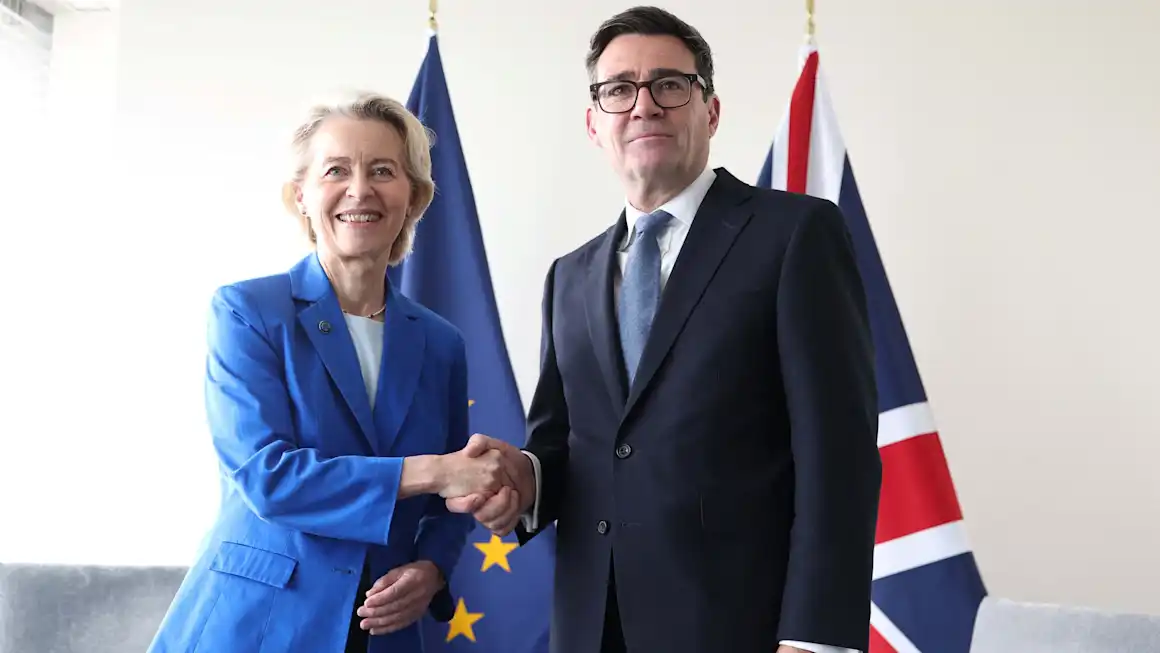
A New Chapter in Trans-Channel Relations
The United Kingdom and the European Union are on the verge of finalizing a comprehensive agreement designed to fundamentally reset bilateral relations. This diplomatic milestone marks a significant shift from the contentious post-Brexit era, signaling a new phase of cooperation and stability between London and Brussels. The deal is expected to address longstanding frictions and establish a clearer framework for future interactions, moving beyond the adversarial dynamics that have characterized much of the relationship in recent years.
Central to this development is the role of Andy Burnham, the Mayor of Greater Manchester, who is due to seal the accord. Burnham’s involvement highlights the growing importance of local leadership in shaping national and international policy outcomes. His participation in the finalization process underscores the multi-layered nature of modern diplomacy, where city leaders often act as key intermediaries in resolving complex geopolitical and economic disputes.
Resolving Trade Disputes and Enhancing Commerce
The agreement is primarily focused on improving British trade with the European Union. For years, post-Brexit trade has been hindered by bureaucratic hurdles, regulatory divergence, and political tension. This new deal aims to streamline these processes, reducing the friction that has impacted businesses on both sides of the channel. By resolving these issues, the accord seeks to create a more predictable and efficient trading environment, which is crucial for the economic health of both regions.
A critical component of this resolution involves the settlement of disputes with France. The input indicates that the broader agreement is contingent upon resolving specific tensions with Paris, France’s capital. France has been a vocal critic of certain UK post-Brexit policies, particularly regarding fishing rights and regulatory standards. The resolution of these bilateral issues with France is a prerequisite for the wider UK-EU deal, suggesting that French cooperation is essential for the success of this reset.
The implications of this deal extend beyond immediate trade statistics. It represents a strategic move to stabilize the UK’s position in the global economy by repairing ties with its largest trading partner. For investors and business leaders, this development suggests a period of reduced uncertainty and potential growth opportunities in sectors previously affected by trade barriers. The improved relations could lead to increased cross-border investment, easier movement of goods, and greater regulatory alignment in key industries.
While the specifics of the trade improvements have not been fully detailed in the initial reports, the focus on resetting relations suggests a holistic approach. This includes not just commercial ties but also diplomatic engagement and shared policy goals. The deal is likely to cover areas such as financial services, agriculture, and technology, where previous disagreements have caused significant disruption. By addressing these areas, the UK and EU aim to build a more resilient and cooperative partnership.
The role of Andy Burnham in sealing this accord also points to the decentralization of political influence in the UK. As a prominent figure in the Labour Party and a leader of a major metropolitan area, Burnham’s involvement signals that local governments are taking an active role in international affairs. This trend may continue as more cities seek to establish their own economic and diplomatic relationships, independent of national government constraints.
Looking Ahead to Implementation
As the deal moves towards finalization, attention now turns to the implementation phase. Both the UK and EU governments will need to navigate the technical and legal processes required to bring the agreement into effect. This includes updating regulations, adjusting customs procedures, and establishing new mechanisms for dispute resolution. The success of the deal will depend on the ability of both sides to execute these changes efficiently and maintain the political will required to sustain the new relationship.
Observers will be watching closely to see how this reset impacts the broader geopolitical landscape. The deal could serve as a model for other non-EU countries seeking closer ties with the bloc. It may also influence the UK’s future negotiations with other global partners, setting a precedent for how trade and diplomatic relations are managed in a post-Brexit world. The stability provided by this agreement could have long-term benefits for economic growth and political stability in Europe.
Key takeaways
- The UK and EU are finalizing a deal to reset bilateral relations after years of post-Brexit tension.
- Greater Manchester Mayor Andy Burnham is set to seal the accord, highlighting the role of local leadership.
- The agreement aims to significantly improve British trade with the EU by resolving longstanding disputes.
- Resolution of specific disputes with France is a critical component of the broader UK-EU deal.
- The deal marks a strategic shift towards stability and cooperation in trans-Channel economic and diplomatic ties.





