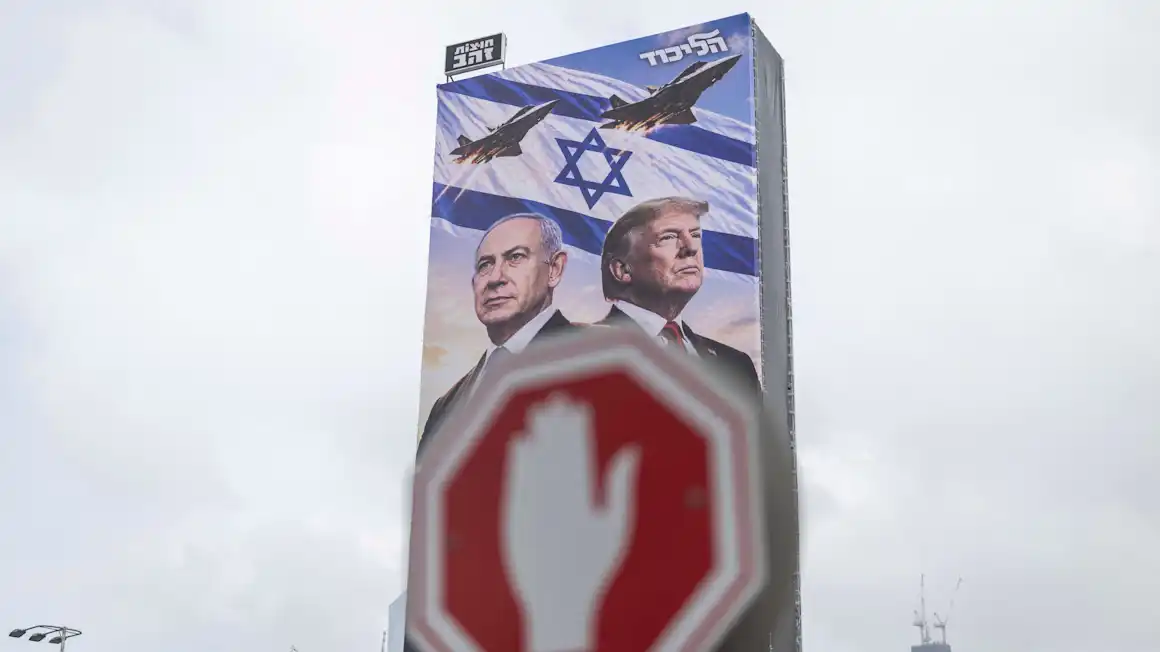
A Surprise Policy Shift
In a development that has sent ripples through international diplomatic channels and financial markets alike, President Donald Trump has announced that the United States will cease military aid to Israel by the end of the current year. The announcement, described as a surprise move by observers, marks a significant departure from longstanding bipartisan support for Israeli security funding and introduces a new layer of uncertainty into foreign policy dynamics. The decision halts a funding stream that has historically been a cornerstone of the US-Israel strategic partnership, potentially reshaping defense procurement strategies and regional stability calculations for the remainder of the term.
The specific figure cited in the President's declaration is $4 billion in annual funding. This sum represents a substantial portion of the military assistance previously allocated to Israel, underscoring the magnitude of the potential disruption. For investors and analysts monitoring government spending and international relations, the sudden pivot away from this established financial commitment suggests a broader recalibration of US foreign policy priorities. The timing of the announcement, coupled with the definitive deadline, leaves little room for gradual adjustment, forcing immediate reassessment of risk models that previously assumed continuity in this aid stream.
Political Context and Midterm Implications
The announcement arrives at a politically sensitive juncture, with the cessation of aid having featured prominently in the recent midterm campaigning. This context suggests that the policy shift is not merely a diplomatic maneuver but a direct reflection of political strategy and campaign promises. The issue of military assistance to Israel has become a focal point for various political factions, with the President's decision likely intended to consolidate support among specific voter bases or to signal a break from traditional establishment norms. The intersection of foreign policy and domestic electoral politics adds a complex dimension to the financial implications, as market participants attempt to gauge the long-term stability of such politically motivated decisions.
Historically, US military aid to Israel has been viewed as a stable, long-term commitment, often transcending individual administrations. The sudden termination of this aid challenges that perception, highlighting the potential for rapid policy reversals based on political considerations. This volatility is of particular interest to defense contractors and international financial institutions that have factored these commitments into their long-term projections. The announcement forces a re-evaluation of how political risk is priced in, particularly regarding assets and sectors tied to international security agreements.
Observers note that the decision could have far-reaching consequences for regional stability in the Middle East. Israel has relied on this funding to maintain its qualitative military edge in the region, and the removal of this support may alter the strategic balance of power. For the global economy, increased instability in key energy-producing regions can translate into heightened oil price volatility and supply chain disruptions. Investors are advised to monitor developments closely, as the geopolitical ramifications of this policy shift could ripple through commodity markets and global trade networks.
Market and Strategic Repercussions
The defense industry, in particular, faces immediate questions regarding how this policy change will affect contracts and future revenue streams. While much of the aid is structured as grants rather than direct procurement, the broader ecosystem of US-Israel defense cooperation is likely to be impacted. Companies involved in joint research, development, or technology transfer may need to adjust their strategic plans in response to the changing political landscape. The uncertainty surrounding the end of the aid program could lead to a period of consolidation or restructuring within the sector as firms adapt to the new reality.
Furthermore, the international reaction to the announcement will be a critical factor in determining the subsequent market impact. Allies and adversaries alike will assess the reliability of US security commitments, which could influence defense spending decisions globally. A perceived weakening of US alliances might accelerate trends toward regional self-reliance in defense, potentially opening new markets for other defense manufacturers while reducing the dominance of US-based firms in certain international contexts. The long-term implications for the US dollar and global reserve currency status, if any, remain to be seen but are a topic of growing discussion among macroeconomic analysts.
Looking Ahead
As the deadline approaches, all eyes will be on the implementation details of the aid cessation. Whether the full $4 billion will be withheld in the final months or if there will be a phased approach remains unclear. The administration's subsequent communications and any legislative responses will provide further clarity on the trajectory of US-Israel relations. For the investment community, this event serves as a stark reminder of the interconnectedness of political decisions and financial markets. The ability to quickly adapt to such shocks is a critical skill for navigating the current environment.
Key takeaways
- President Trump has announced the termination of $4 billion in annual military aid to Israel by the end of the year.
- The decision comes amidst a backdrop of midterm campaigning where the issue was a prominent topic.
- The sudden policy shift introduces significant geopolitical risk and uncertainty for defense and international markets.
- The move challenges the perception of US-Israel military aid as a stable, long-term bipartisan commitment.
- Investors are monitoring the potential impact on regional stability and global commodity prices.





