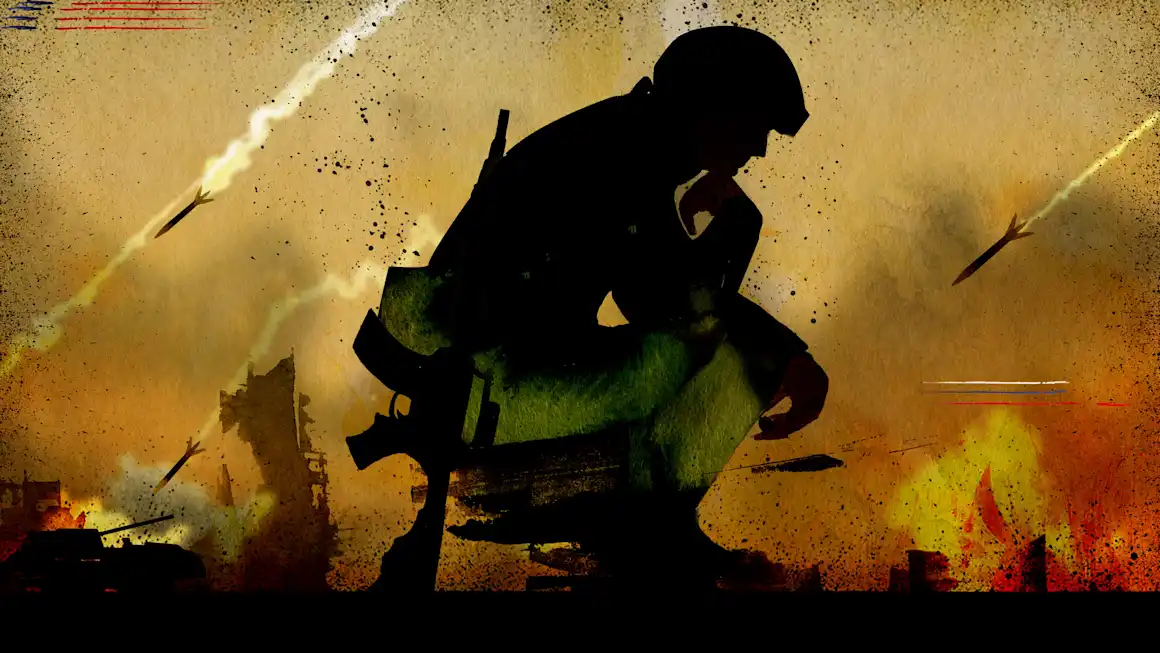
The Illusion of Quick Victories
Recent geopolitical developments have brought into sharp focus the persistent danger of the 'short war illusion'—the strategic miscalculation that military interventions can be resolved swiftly with minimal cost. Both the United States and Russia have recently navigated conflicts that began with high expectations of rapid resolution but evolved into protracted, costly engagements. These parallel failures offer a critical case study for global powers, particularly China, as it assesses its own long-term strategic posture under the leadership of Xi Jinping.
The American experience in recent decades serves as a primary reference point for this analysis. Multiple military interventions initiated by US leadership were predicated on the assumption that superior technological and conventional military power would lead to quick stabilization and exit strategies. Instead, these engagements often resulted in prolonged instability, significant financial expenditure, and ambiguous political outcomes. The cumulative effect of these experiences has reshaped internal debates within the US about the efficacy of military interventionism versus diplomatic engagement.
Similarly, Russia’s recent military actions have highlighted the perils of underestimating the resilience of targeted nations and the complexity of modern warfare. The initial phases of the conflict suggested a potential for rapid territorial gains, but the subsequent resistance demonstrated the limitations of conventional military superiority when faced with determined defense and international sanctions. This outcome has forced a reevaluation of Russian military strategy and its economic sustainability over the long term.
Xi Jinping’s Strategic Calculus
Central to the current geopolitical discourse is the question of whether Chinese leadership, under Xi Jinping, is observing these precedents to adjust its own strategic planning. The core inquiry is whether Beijing is learning the 'right lesson' from the failures of Washington and Moscow. The prevailing view among analysts is that the Chinese leadership is highly attentive to the costs incurred by its superpower rivals, particularly the economic and social toll of prolonged military engagements.
For China, the lesson may not be about avoiding military power projection entirely, but rather about ensuring that any future conflict has a clear, achievable objective and a viable exit strategy. The 'short war illusion' poses a risk that even the most disciplined military apparatus can fall victim to if the political context is misunderstood. Xi Jinping’s administration appears to be prioritizing strategic patience and economic resilience over rapid, high-risk military adventures that could destabilize the nation’s long-term development goals.
However, the interpretation of these lessons is not uniform. Some analysts argue that the failures of the US and Russia may have emboldened certain elements within the Chinese military establishment, suggesting that the West is vulnerable and that Russia’s resistance indicates a shift in the balance of power. This perspective complicates the narrative that Beijing is simply learning to avoid conflict, pointing instead to a more nuanced strategy of testing boundaries and exploiting perceived weaknesses in international alliances.
Implications for Global Stability
The divergence in how the US, Russia, and China interpret these military failures has significant implications for global stability. If China concludes that short wars are unfeasible, it may invest more heavily in hybrid warfare, cyber capabilities, and economic coercion as alternative tools of statecraft. This shift could lead to a new era of geopolitical competition that is less about direct military confrontation and more about sustained pressure across multiple domains.
Conversely, if the leadership in Beijing perceives that the cost of inaction or delayed response is higher than the cost of a limited, swift military action, the risk of miscalculation increases. The 'short war illusion' remains a potent psychological factor in military planning, potentially leading to decisions that underestimate the complexity of modern conflicts. The international community must remain vigilant to these dynamics, recognizing that the lessons drawn by one power may not align with the strategic realities on the ground.
Key takeaways
- The United States and Russia have both experienced military conflicts that failed to achieve their initial objectives of rapid resolution.
- Chinese leadership under Xi Jinping is closely analyzing these failures to inform its own strategic decision-making.
- The 'short war illusion' poses a persistent risk of miscalculation in military planning across major powers.
- China may be shifting focus toward economic and hybrid warfare strategies to avoid the pitfalls of prolonged conventional conflict.
- Interpretations of these lessons vary, with some analysts suggesting potential emboldening rather than caution within Chinese military circles.





