Diplomatic Tensions Emerge Over Oval Office Photo
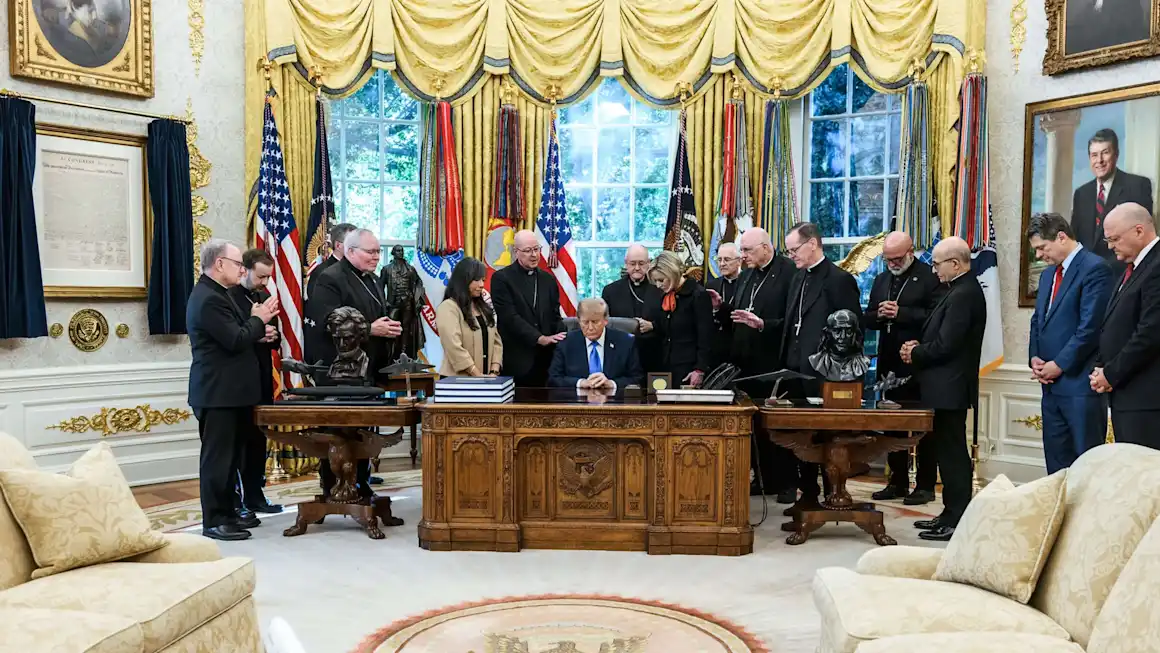
A significant diplomatic rift has surfaced between the Catholic Church and the White House following a public dispute over the context and intent of a recent photograph taken in the Oval Office. The controversy centers on an image featuring President Donald Trump alongside several Catholic bishops, which has drawn sharp criticism from high-ranking church officials who allege the administration engaged in political maneuvering to exploit religious leaders for electoral or policy gains.
At the heart of the accusation is Archbishop Paul S. Coakley of Milwaukee, who has publicly stated that the White House "exploited" clerics during their appearance in the Oval Office. The Archbishop’s remarks suggest that the meeting was not merely a routine engagement between government officials and religious leaders but was instead orchestrated to serve specific political objectives. This characterization has elevated the incident from a minor public relations slight to a substantive question of church-state relations and political ethics.
Accusations of Exploitation and Political Gain
The core of the dispute lies in the perceived lack of transparency regarding the meeting's purpose. Archbishop Coakley’s statement implies that the bishops were used as props to bolster the President’s standing with the Catholic voting bloc, a demographic that has become increasingly pivotal in American politics. By framing the interaction as "manipulative," the Archbishop is challenging the narrative that such visits are purely collaborative or driven by shared moral concerns.
Observers note that the timing and composition of the photo were critical factors in the backlash. The image, which shows the President with a group of bishops, was likely intended to signal support for religious values and conservative social policies. However, the Archbishop’s rebuttal suggests that the clerics may have been misled about the extent to which their presence would be leveraged for political capital. This raises broader questions about the integrity of interactions between political figures and religious institutions.
The accusation of "manipulation" is a serious charge in the context of diplomatic and ecclesiastical relations. It suggests a deliberate attempt by the White House to bypass standard protocols or genuine dialogue in favor of a staged public relations event. If true, this would represent a significant breach of trust between the Church and the administration, potentially affecting future collaborations on issues such as religious freedom, poverty alleviation, and international humanitarian efforts.
Broader Implications for Church-State Relations
This incident highlights the growing tension between political expediency and institutional integrity. For the Catholic Church, which maintains a delicate balance between engaging with political powers and maintaining its moral independence, such accusations are particularly damaging. The Archbishop’s public rebuke signals that the Church is willing to challenge political narratives when it perceives its autonomy or the dignity of its members to be compromised.
The reaction from the White House has not yet been fully detailed in public reports, but the administration is likely to defend the meeting as a standard engagement with religious leaders. However, the specificity of the Archbishop’s claim—that the bishops were "exploited"—forces the administration to address the nature of the interaction more directly. This could lead to a prolonged public debate about the role of religion in modern American politics and the expectations of clerical figures in the public square.
As the story develops, attention will focus on whether the Church takes further disciplinary or diplomatic steps to distance itself from the administration. The Archbishop of Milwaukee’s statement may serve as a catalyst for other religious leaders to voice similar concerns, potentially isolating the White House on this issue. Conversely, the administration may attempt to rally support from other religious groups to counter the narrative of exploitation.
What Happens Next
The immediate next steps involve monitoring official statements from both the Archdiocese of Milwaukee and the White House Press Office. Further clarification on the agenda of the Oval Office meeting may emerge, potentially shedding light on whether the bishops were briefed on the political implications of their attendance. Additionally, media coverage will likely analyze the broader political fallout, including how this controversy influences Catholic voter sentiment in upcoming elections.
Key takeaways
- Archbishop Paul S. Coakley of Milwaukee accused the White House of exploiting Catholic bishops in an Oval Office photo.
- The accusation alleges that President Trump manipulated clerics for political gain rather than engaging in genuine dialogue.
- The dispute highlights growing tensions between the Catholic Church and the Trump administration over church-state relations.
- The controversy centers on the perceived use of religious leaders as political props for electoral strategy.
- The incident may impact future collaborations between the Church and the federal government on policy issues.





