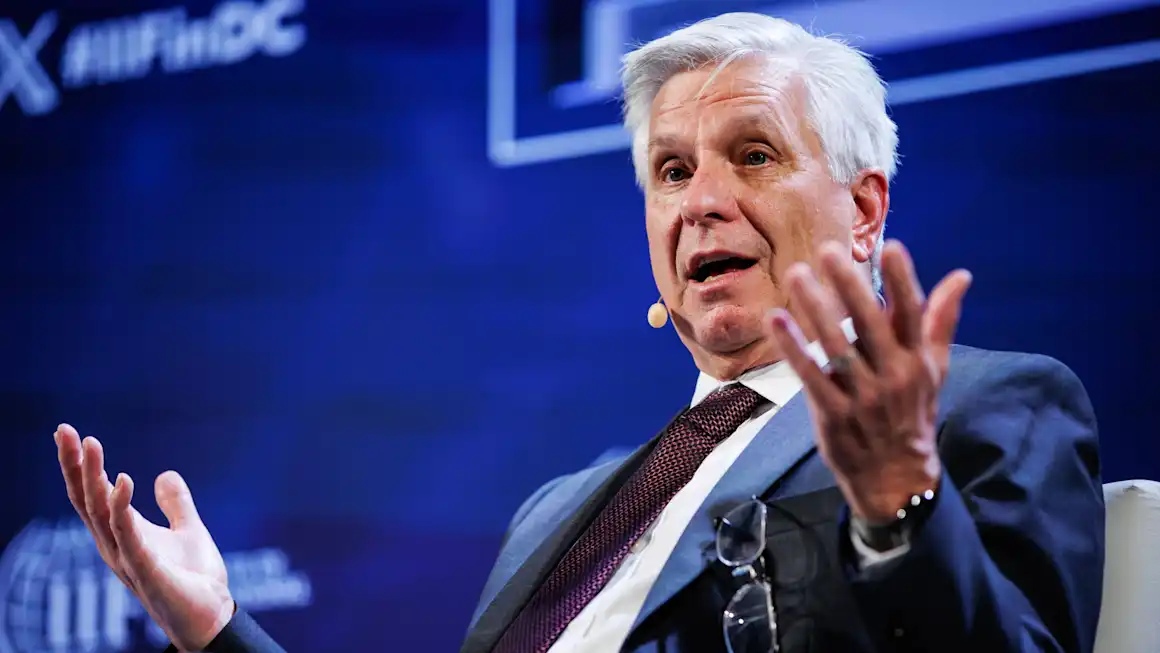
Waller’s Warning on Inflation Trajectory
Christopher Waller, a voting member of the Federal Reserve’s Federal Open Market Committee (FOMC), has introduced a more hawkish perspective to the current monetary policy debate. In recent remarks, the Governor indicated that the central bank might need to consider a substantial 50-basis-point rate hike if underlying inflation metrics do not demonstrate a decisive slowdown. This statement marks a notable shift in tone, suggesting that the Federal Reserve is prepared to take aggressive action to ensure price stability is restored to its target levels.
The suggestion of such a significant move is particularly noteworthy given that the last 50-basis-point increase occurred in 2022. At that time, the Fed was engaged in a rapid tightening cycle to combat surging inflation that had reached multi-decade highs. By referencing this historical precedent, Waller is highlighting the potential severity of the current economic landscape and the lengths to which the central bank might need to go to anchor inflation expectations.
"Policymakers should weigh a 50-basis-point move if US inflation fails to slow," stated Governor Christopher Waller.
Waller’s comments reflect a growing concern among some Fed officials that inflation may be proving more persistent than previously anticipated. While the central bank has raised interest rates at a record pace over the past year, recent data has shown that price pressures remain elevated in several key sectors. The Governor’s remarks serve as a reminder that the work of bringing inflation down is not yet complete and that the Fed remains data-dependent in its decision-making process.
Market Implications and Economic Context
A 50-basis-point hike would represent a significant acceleration in the tightening cycle, potentially impacting borrowing costs for consumers and businesses. Mortgage rates, auto loans, and credit card interest rates are directly tied to the federal funds rate, meaning that any further increases would likely exacerbate financial pressures for households already dealing with high living costs. For businesses, higher borrowing costs could lead to reduced investment and slower hiring, potentially cooling the labor market further.
The Federal Reserve has been closely monitoring a range of inflation indicators, including the Personal Consumption Expenditures (PCE) price index, which is the central bank’s preferred measure of inflation. Recent reports have shown mixed signals, with some categories of inflation cooling while others remain stubborn. This divergence has led to debates within the FOMC about the appropriate pace of future rate hikes. Some policymakers argue for a more cautious approach to avoid unnecessary economic disruption, while others, like Waller, emphasize the need to maintain credibility by ensuring inflation is decisively brought under control.
Investors and analysts are closely watching upcoming economic data releases for clues about the Fed’s next move. Key indicators such as the Consumer Price Index (CPI), employment reports, and GDP growth figures will be critical in shaping the narrative around monetary policy. If inflation data continues to come in above expectations, the likelihood of a larger rate hike increases. Conversely, if data shows clear signs of cooling, the Fed may feel more comfortable pausing its tightening cycle or implementing smaller increases.
The broader economic environment also plays a role in the Fed’s calculations. While inflation has been the primary focus, the central bank is also mindful of the potential for a recession. The relationship between interest rates and economic growth is complex, and excessive tightening can lead to an unintended economic downturn. However, Waller’s comments suggest that the Fed is prioritizing the fight against inflation, even if it means accepting some degree of economic slowdown as a necessary consequence.
Looking Ahead: Policy Uncertainty
As the next FOMC meeting approaches, market participants are bracing for potential volatility. The possibility of a 50-basis-point hike has already influenced financial markets, with bond yields and stock prices reacting to the shifting expectations. The Fed’s forward guidance has become increasingly important in managing these expectations and minimizing market disruption.
Waller’s remarks are likely to fuel further debate among economists and policymakers about the appropriate path for monetary policy. Some may view his comments as a warning shot intended to keep inflation expectations anchored, while others may see them as a genuine indication of the Fed’s willingness to take more drastic measures. Regardless of the intent, the message is clear: the Federal Reserve is not yet satisfied with the current trajectory of inflation and is prepared to act decisively if necessary.
The coming weeks will be critical in determining the Fed’s next steps. Economic data will provide the necessary evidence to guide the committee’s decisions, and any surprises in inflation or employment figures could shift the balance of power within the FOMC. Investors, businesses, and consumers would be wise to prepare for the possibility of continued monetary tightening and the associated impacts on the broader economy.
Key takeaways
- Federal Reserve Governor Christopher Waller has suggested that a 50-basis-point rate hike is a possibility if inflation does not slow down.
- This potential move would be the largest rate increase since 2022, signaling a significant escalation in the Fed’s tightening campaign.
- Waller’s comments highlight the central bank’s continued concern about persistent inflation and its willingness to take aggressive action.
- Markets and investors are closely monitoring upcoming economic data to gauge the likelihood of such a substantial rate hike.
- The proposal underscores the ongoing debate within the FOMC regarding the appropriate pace of monetary policy adjustments.





