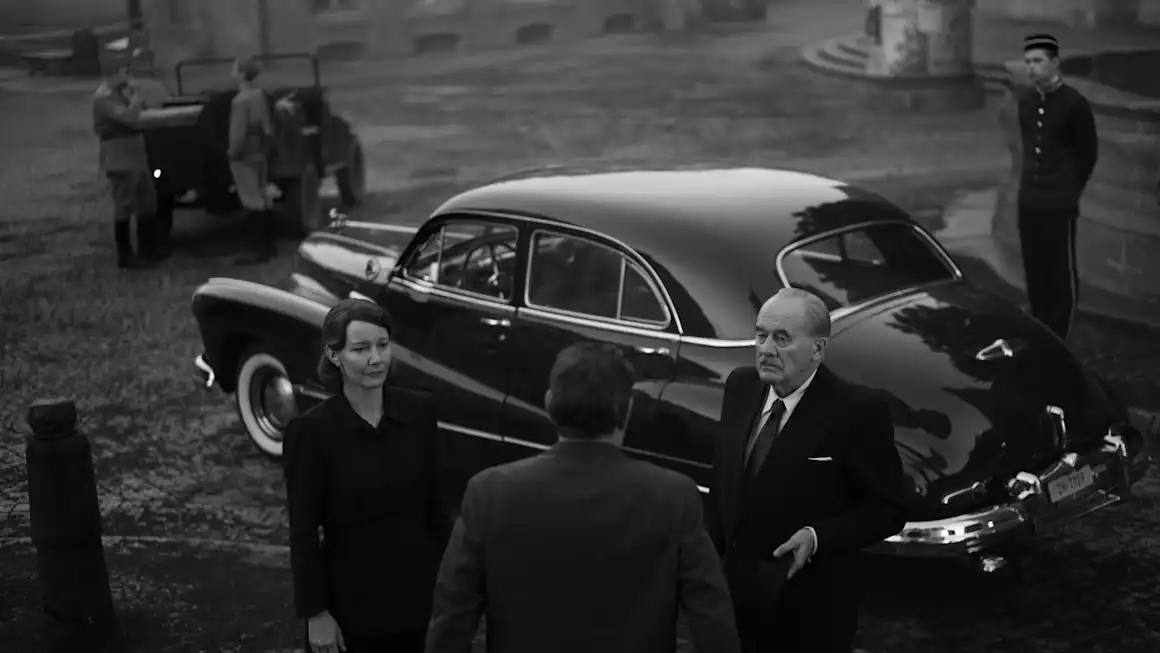
The Critique of Neutrality
The cultural conversation surrounding the film 'Fatherland' has ignited a significant debate regarding the expectations placed upon audiences and the artistic responsibility of filmmakers. A prevailing critique argues that the narrative structure of the movie is excessively harsh towards those who choose not to align themselves with specific political or ideological stances. This perspective suggests that the film does not merely present a story but actively judges the 'uncommitted' viewer, creating a divide between those who engage with the political subtext and those who wish to remain detached from it.
At the heart of this discussion is the concept of the 'right to be apolitical.' In an era where media consumption is increasingly viewed through a political lens, the idea that one can simply enjoy a narrative without subscribing to its underlying ideological framework is becoming more contentious. The criticism of 'Fatherland' highlights a growing sentiment that entertainment media is no longer a neutral space but a battleground for political expression, leaving little room for ambiguity or disengagement.
Harsh Judgments on the Uncommitted
The specific nature of the criticism leveled at 'Fatherland' centers on its treatment of characters or themes that represent neutrality or indecision. Rather than portraying such positions as valid or understandable, the film is accused of depicting them with disdain or as a failure of moral courage. This approach has been described as 'too harsh,' implying that the filmmakers have adopted a punitive stance towards viewers or characters who do not take a definitive side in the conflicts presented within the narrative.
This harshness extends beyond the screen, influencing how audiences perceive their own role as consumers of media. When a film explicitly or implicitly condemns the act of remaining uncommitted, it challenges the traditional notion of entertainment as a form of escape or universal human experience. Instead, it positions the viewing experience as a test of political alignment, where neutrality is equated with complicity or weakness.
Proponents of this critique argue that such an approach alienates a significant portion of the audience who do not identify with the political binaries presented. By refusing to acknowledge the validity of the 'uncommitted' perspective, the film risks reducing complex human experiences to simple political markers. This reductionism can lead to a polarized reception, where the film is celebrated by those who agree with its ideological stance and condemned by those who feel misrepresented or attacked by its narrative choices.
Broader Implications for Media
The debate over 'Fatherland' is not isolated but reflects a broader trend in the entertainment industry. As studios and creators navigate an increasingly polarized social landscape, the pressure to take a stand on political issues has intensified. This pressure often leads to content that is explicitly political, leaving little room for the subtlety or ambiguity that characterized much of earlier cinema. The criticism of 'Fatherland' serves as a case study in the potential backlash against this trend, as audiences begin to push back against what they perceive as ideological coercion.
Furthermore, the discussion highlights the tension between artistic freedom and audience reception. While filmmakers have the right to express their views, the question remains whether it is effective or ethical to do so in a manner that explicitly judges those who do not share those views. The 'right to be apolitical' argument suggests that there is value in preserving spaces where political ideology is not the primary lens through which art is evaluated.
As the conversation around 'Fatherland' continues, it is likely to influence future discussions about the role of politics in entertainment. Industry professionals may need to consider how their creative choices impact diverse audiences, particularly those who seek to engage with media on a level that transcends political division. The outcome of this debate could shape the way stories are told and received in the coming years, potentially leading to a reevaluation of how political themes are integrated into mainstream narratives.
Key takeaways
- The film 'Fatherland' is criticized for its harsh treatment of uncommitted individuals in its narrative.
- Debate centers on the 'right to be apolitical' and whether entertainment should be a neutral space.
- Current media trends often force political alignment, alienating audiences who prefer neutrality.
- The criticism suggests that the film judges the uncommitted rather than exploring their perspective.
- This controversy reflects broader industry pressures to engage explicitly with political issues.
- The outcome may influence how future filmmakers balance artistic expression with audience diversity.





