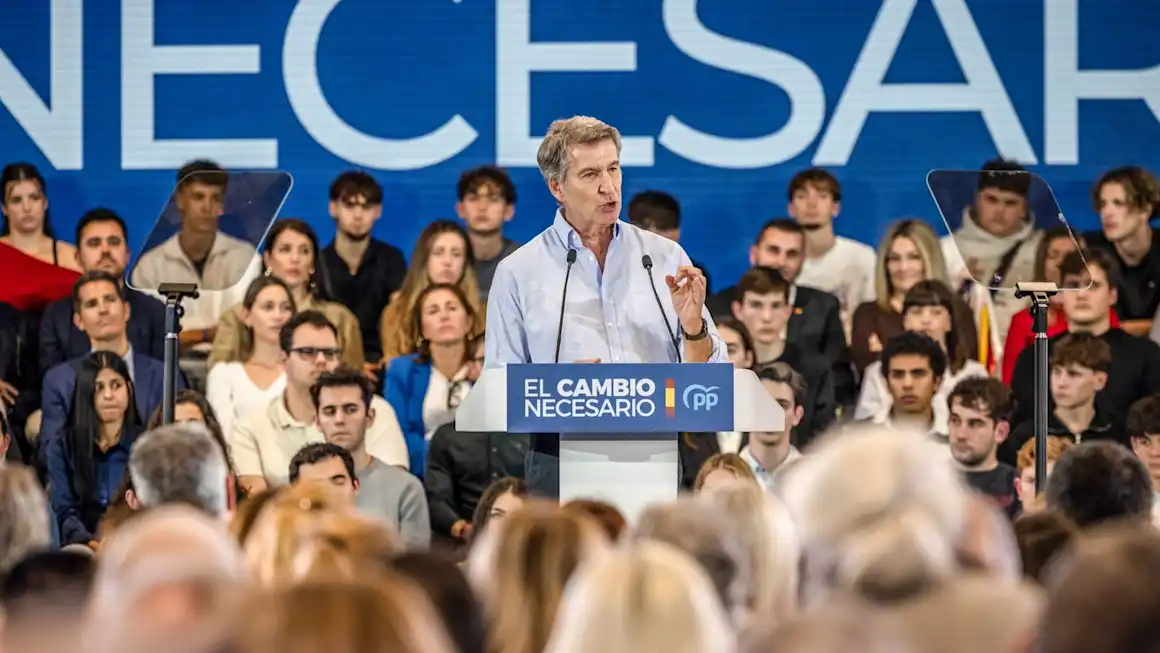
A Historic Coalition
Alberto Núñez Feijóo, the leader of the conservative Popular Party (PP), is currently on course to assume the role of Spain's next prime minister. This potential development marks a significant shift in the country's political landscape, as it relies on a coalition that includes Vox, a far-right political party. The arrangement represents a notable departure from traditional governing alliances in post-Franco Spain, signaling a new era of right-wing consolidation in the Iberian nation.
The prospect of Feijóo leading the government is not a standalone achievement but is directly tied to the political support of Vox. Without the backing of this party, the path to the premiership would be obstructed by the complex arithmetic of the Spanish parliament. This dependency highlights the growing influence of the far-right in Spanish legislative politics and the strategic necessity of cross-party cooperation among conservative forces.
Political Implications and Dynamics
The term 'austere' has been associated with Feijóo's political style, reflecting a conservative approach to governance and economic management. This characterization contrasts with the platform of Vox, which often emphasizes nationalist and anti-establishment themes. The alliance between the mainstream conservative PP and the far-right Vox party creates a unique political dynamic, blending traditional conservative policies with the more radical elements of the far-right.
Analysts suggest that this coalition could reshape Spain's domestic and international policy priorities. The inclusion of Vox in the governing coalition may lead to stricter immigration policies, a reevaluation of regional autonomy for areas like Catalonia and the Basque Country, and a more skeptical stance towards certain European Union initiatives. The stability of the government will likely depend on the ability of Feijóo to balance the demands of both parties while maintaining legislative support.
What Happens Next
As the political situation unfolds, the focus remains on the parliamentary negotiations and the formal appointment process. The support of Vox is not merely symbolic; it is a critical component of the numerical majority required for Feijóo to be elected by the Congress of Deputies. This process involves intense lobbying and policy concessions, as both parties seek to align their agendas for the upcoming term.
The international community will be closely watching these developments, particularly given Spain's role within the European Union. The alignment of a major EU member state's government with far-right elements could have ripple effects on EU cohesion and policy direction. Diplomatic relations and trade agreements may also be subject to review as the new administration takes shape.
Domestically, the reaction to Feijóo's potential premiership has been mixed. Supporters view the coalition as a necessary correction to years of left-wing governance, while opponents warn of the potential for social polarization and the erosion of democratic norms. The coming weeks will be crucial in determining the stability and longevity of this new political arrangement.
Key takeaways
- Alberto Núñez Feijóo is poised to become Spain's next prime minister.
- His appointment is contingent on the backing of the far-right Vox party.
- The coalition marks a significant shift in Spanish political alliances.
- Feijóo is characterized by an 'austere' conservative political style.
- The success of the government depends on balancing PP and Vox policy demands.





