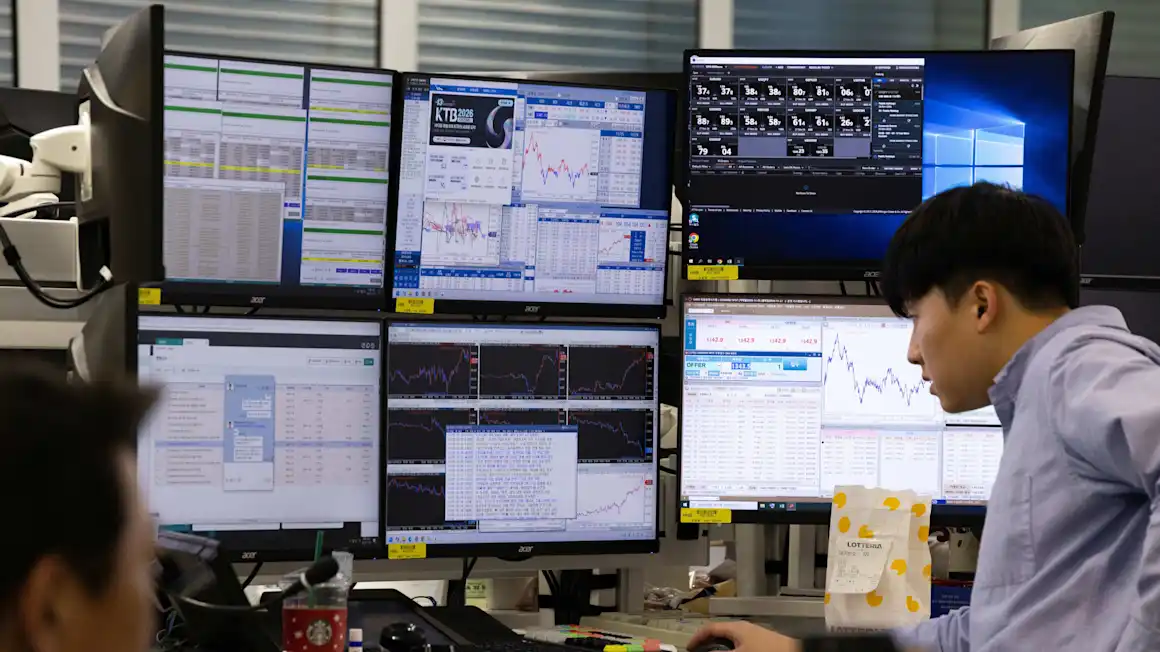
Regional Markets Show Resilience
Asian equity markets opened higher on Monday, signaling a shift in sentiment following a period of significant volatility in global financial hubs. The advance comes as investors attempt to stabilize positions after a turbulent trading session in the United States, where the intersection of macroeconomic data and sector-specific risks created a challenging environment for traders. While the broader regional indices posted gains, the underlying tone of the trading session reflected a cautious approach among market participants who are closely monitoring the trajectory of the technology sector.
The rally in Asian markets was broad-based, with major indices in Japan, South Korea, and Australia contributing to the positive momentum. This movement suggests that while US markets grappled with immediate concerns, Asian investors may be viewing the current price action as an opportunity to rebalance portfolios or enter positions in sectors that have not yet fully priced in the potential long-term impacts of the ongoing technological shift. The divergence in sentiment highlights the complex interplay between regional economic drivers and global market forces.
Tech Sector Faces Sustainability Questions
A central theme driving the recent volatility in US markets is the growing debate regarding the sustainability of the current artificial intelligence boom. Tech shares have declined notably this month, reflecting investor apprehension about whether the massive capital expenditures and revenue projections associated with AI infrastructure can be maintained over the long term. This correction in the technology sector has rippled through global markets, prompting a re-evaluation of valuation metrics across the industry.
The concerns are not isolated to a single company or sub-sector but are affecting the technology industry as a whole. Investors are increasingly scrutinizing the balance between the hype surrounding generative AI and the tangible earnings reports that justify the high valuations. As the month progresses, the pressure on tech stocks has intensified, leading to a pullback that has forced many institutional investors to reassess their exposure to high-growth technology names. This pullback is a critical development, as the technology sector has been a primary engine of market growth over the past year.
The decline in tech shares is part of a broader pattern of profit-taking and risk management that has characterized recent trading sessions. Analysts note that while the long-term potential of AI remains a compelling narrative for many institutional investors, the short-term volatility is creating headwinds for market sentiment. This caution is evident in the reduced trading volumes and the increased hedging activity observed in options markets, where traders are positioning for potential further downside or increased volatility in the near term.
Looking Ahead: Navigating Uncertainty
As markets continue to digest the latest data, the focus remains on upcoming economic indicators and corporate earnings reports that will provide further clarity on the health of the technology sector. Investors are particularly attentive to guidance from major tech giants, as their performance will likely set the tone for the broader industry. The coming weeks will be crucial in determining whether the current correction is a temporary pause or a more significant shift in the market's perception of AI-related investments.
Global economic conditions also play a role in this dynamic, with interest rate expectations and inflation data influencing the cost of capital for technology companies. Higher borrowing costs can impact the ability of firms to fund their AI initiatives, adding another layer of complexity to the investment thesis. As such, the interplay between monetary policy and technological innovation will remain a key focus for market observers in the near future.
Key takeaways
- Asian stock markets advanced on Monday following a volatile trading session in the United States.
- Tech shares have declined significantly this month due to fears that the AI boom may not be sustainable.
- Investors are closely monitoring corporate earnings and economic data to assess the long-term viability of AI investments.
- The pullback in technology stocks reflects a broader reassessment of valuation metrics in the sector.
- Global market sentiment is being shaped by the interplay between macroeconomic factors and sector-specific risks.





