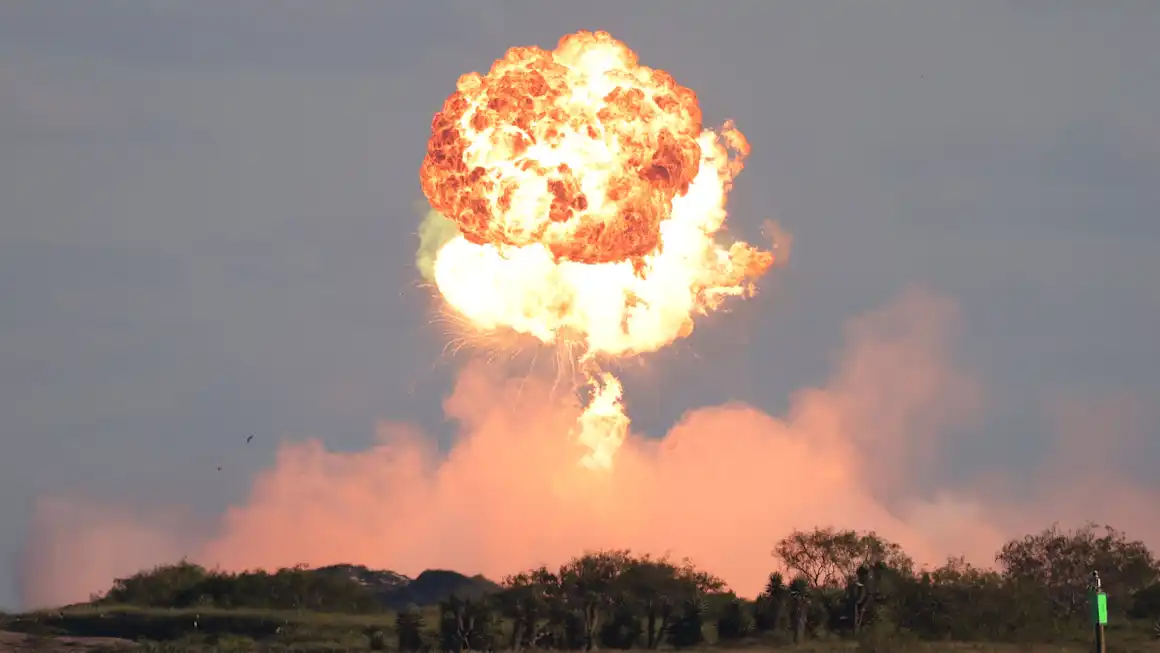
Abort Signal Issued After Booster Anomaly
SpaceX has officially aborted its latest attempt to retrieve the Super Heavy booster using the launch tower's mechanical arms, known as 'chopsticks,' following a failure of the booster during the ascent phase of a Starship test flight. The decision to call off the recovery operation came as telemetry data indicated that the booster did not maintain the stable flight profile required for a successful landing maneuver. This event underscores the persistent engineering challenges inherent in developing a completely reusable heavy-lift launch vehicle, a goal that has seen Elon Musk's company face repeated setbacks in its pursuit of full reusability.
The launch tower, a massive steel structure standing 387 feet tall at the Starbase facility in Boca Chica, Texas, is designed to catch the returning Super Heavy booster mid-air using two large robotic arms. This method is intended to eliminate the need for landing legs on the booster, thereby reducing weight and complexity while allowing for rapid turnaround times between flights. However, the system has struggled to achieve reliable catches, with previous attempts resulting in the booster crashing into the launch pad or missing the arms entirely.
In this most recent incident, the Super Heavy booster, which consists of up to 33 Raptor engines, failed to sustain powered flight after liftoff. While the Starship upper stage separated from the booster, the booster itself did not execute the controlled descent necessary to return to the launch site. Consequently, SpaceX engineers on the ground determined that attempting to catch the booster would pose an unacceptable risk to the launch infrastructure and surrounding personnel. The abort signal was sent to the tower's control systems, preventing the robotic arms from engaging with the falling hardware.
Elon Musk, the CEO of SpaceX, described the event as a setback in the broader effort to develop a fully reusable megarocket system. The company has been conducting iterative test flights to refine the flight software, engine performance, and structural integrity of both the booster and the spacecraft. Each test provides critical data, but the failure to recover the booster means that the vehicle will need to be rebuilt or heavily repaired for future flights, delaying the timeline for achieving full operational reusability.
Implications for Reusability Goals
The failure to catch the booster highlights the technical difficulties associated with the 'mechanical arm' recovery method. Previous successful catches have been achieved in controlled test environments, but integrating this system with high-thrust boosters that experience dynamic loads during ascent and re-entry remains a complex engineering problem. The booster must land with precise timing and orientation to allow the arms to grasp the 'lateral fins' on the side of the vehicle. Any deviation in trajectory or velocity can result in a missed catch or structural damage to the arms or the booster.
SpaceX has been working to improve the reliability of the Raptor engines, which power both the Super Heavy booster and the Starship upper stage. The engines must perform flawlessly during the boost-back, re-entry, and landing burns to ensure the booster returns to the launch site. In this flight, the failure of the booster suggests that one or more engines may have shut down prematurely or that the vehicle experienced a control issue that prevented it from maintaining the necessary flight path. Detailed analysis of the flight data will be required to determine the exact cause of the failure.
The incident serves as a reminder of the high-risk nature of experimental rocket development. While SpaceX has successfully recovered and re-flown orbital-class boosters in the past, the Super Heavy booster is significantly larger and more powerful than previous designs, such as the Falcon 9. The scaling up of the system introduces new variables and challenges that must be addressed through rigorous testing. The company has stated that it is committed to achieving full reusability, but the timeline for this achievement remains uncertain given the frequency of technical hurdles.
As SpaceX continues to iterate on the Starship design, the focus will likely shift to improving the robustness of the recovery system and the reliability of the booster's flight profile. The launch tower's robotic arms have been upgraded in recent months to handle the stresses of catching the booster, but their integration with the vehicle's flight software requires further refinement. Future test flights will likely include more attempts to catch the booster, but success will depend on the booster's ability to execute a precise and stable descent.
Key takeaways
- SpaceX aborted the attempt to catch the Super Heavy booster with the launch tower's robotic arms after the booster failed during ascent.
- The failure marks a setback in Elon Musk's efforts to develop a completely reusable megarocket system.
- The Super Heavy booster did not maintain the stable flight profile required for a successful landing maneuver.
- The mechanical arm recovery method aims to eliminate landing legs but has proven difficult to execute reliably with high-thrust boosters.
- SpaceX must analyze flight data to determine the specific cause of the booster failure before future recovery attempts.