Reaffirming Commitment to Global Trade Rules
Singapore Prime Minister Lawrence Wong has issued a firm declaration regarding the nation's stance on international trade regulations, specifically concerning the export of advanced technology. In a recent statement, Wong vowed that the city-state would not allow companies to break the law by utilizing Singapore as a backdoor to circumvent existing export controls. This clarification comes amidst heightened global scrutiny over the flow of sensitive technological goods, particularly those related to artificial intelligence and high-performance computing.
The Prime Minister's remarks underscore Singapore's commitment to adhering to international norms and bilateral agreements. By explicitly ruling out the use of Singapore as a conduit for illegal transfers, the government aims to preserve its reputation as a reliable and rule-abiding hub for global commerce. This position is critical for maintaining trust with major trading partners, particularly the United States, which has been increasingly strict in its enforcement of semiconductor export restrictions.
Wong emphasized that the Singaporean government will take necessary measures to ensure that no entities exploit the jurisdiction to bypass legal restrictions. The statement reflects a broader strategy to align national policies with global security concerns without compromising the country's status as a free-trade zone. Officials have indicated that existing regulatory frameworks are sufficient to handle such scenarios, provided they are enforced with rigor and transparency.
Implications for the Semiconductor Industry
The semiconductor industry has become a focal point of geopolitical tension, with the United States implementing stringent controls on the export of advanced chips and related manufacturing equipment to certain countries. These measures are designed to limit the technological capabilities of potential adversaries. Singapore, as a major hub for chip design and testing, is well-positioned to influence the supply chain. However, the government's latest stance signals that it will not facilitate any attempts to route these controlled items through Singaporean entities to reach restricted destinations.
Companies operating in Singapore's semiconductor sector must now navigate an increasingly complex regulatory landscape. The Prime Minister's warning serves as a reminder that compliance with export control laws is non-negotiable. Violations could result in severe legal consequences, including fines, sanctions, and reputational damage. Industry stakeholders are expected to review their supply chain protocols to ensure that all transactions comply with both Singaporean law and international obligations.
Analysts suggest that this clear position from Singapore may reduce uncertainty for multinational corporations operating in the region. By providing a definitive answer on how the city-state handles such sensitive matters, the government helps businesses plan their operations with greater confidence. However, it also raises the bar for due diligence, requiring companies to be more vigilant about the end-users of their products and the potential for diversion.
Looking Ahead
The Prime Minister's comments are likely to be closely watched by other nations and international organizations. Singapore's stance may encourage similar commitments from other neutral or non-aligned jurisdictions that are often scrutinized for potential loopholes in export control regimes. The government has not specified new legislative measures but has implied that current laws are adequate if properly enforced.
As the geopolitical landscape continues to evolve, the pressure on global supply chains is expected to intensify. Singapore's role as a neutral trade hub will remain significant, but its operations will be closely monitored to ensure they do not inadvertently or deliberately support activities that violate international sanctions. The Prime Minister's firm language signals a zero-tolerance approach to any attempts to undermine these global rules.
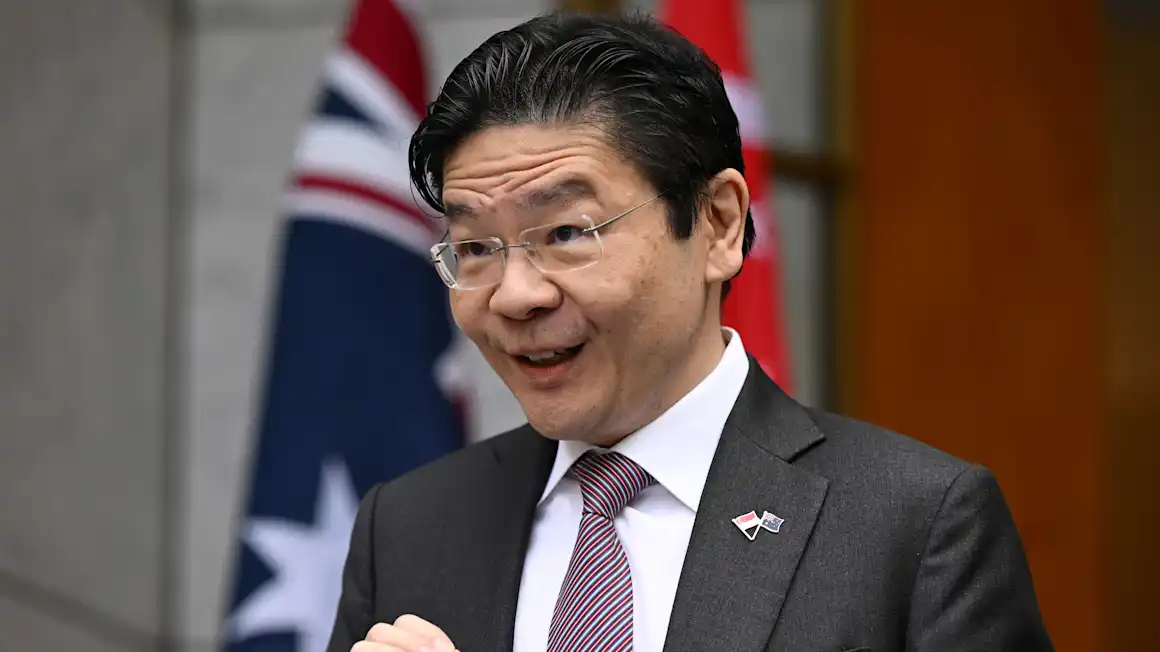
Lawrence Wong vows city-state will not let companies break law by circumventing export controls.
Key takeaways
- Singapore Prime Minister Lawrence Wong explicitly stated the nation will not serve as a backdoor for bypassing US chip export controls.
- The government vowed to prevent companies from breaking laws by circumventing existing regulatory frameworks through Singaporean jurisdiction.
- Wong's remarks reaffirm Singapore's commitment to international trade rules and its reputation as a reliable global commerce hub.
- Companies in the semiconductor sector are expected to enhance compliance measures to avoid legal consequences and reputational damage.
- The statement aims to reduce uncertainty for multinational corporations by clarifying Singapore's strict enforcement stance on export controls.





