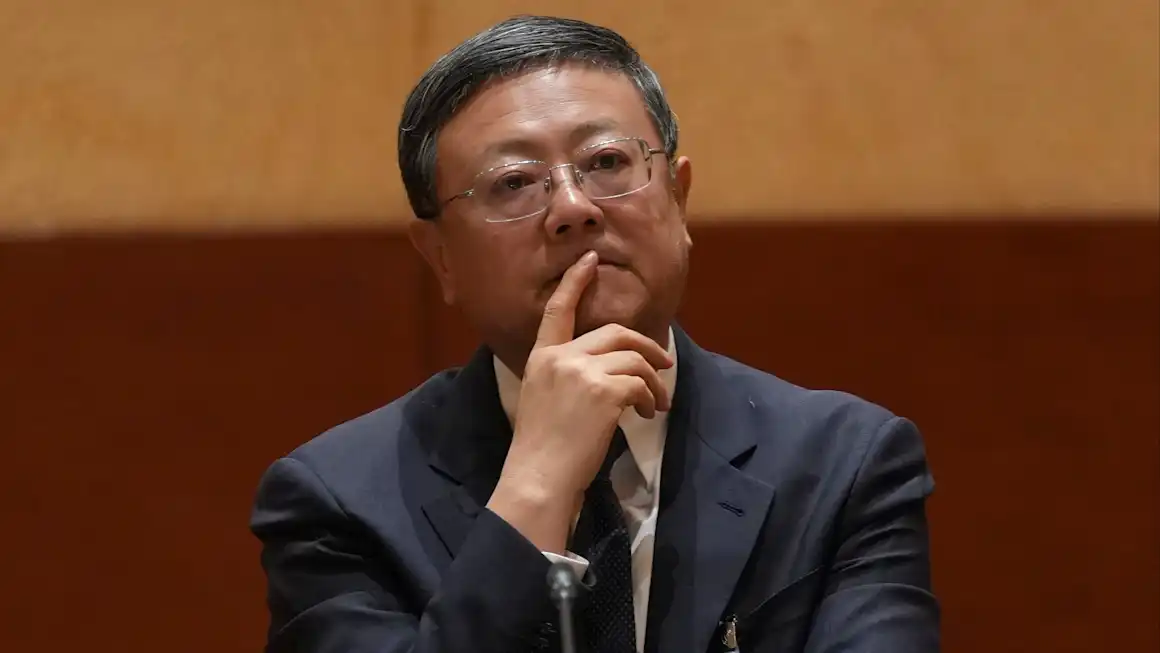
Top Leadership Under Scrutiny
Chen Jining, the Communist Party Secretary of Shanghai, has been placed under investigation by China's top anti-corruption agency. The announcement confirms long-standing rumors regarding his conduct and signals a continued, aggressive push by the central government to root out corruption within the highest levels of the Chinese political hierarchy. Chen, who serves as the chief political officer in China's financial hub, is accused of suspected severe violations of discipline and laws, according to official statements released by the Central Commission for Discipline Inspection (CCDI).
Shanghai holds a strategic position in China's political landscape as the nation's economic engine and a global financial center. The Party Secretary of Shanghai is traditionally one of the most powerful positions in the country, often serving as a stepping stone to the Politburo Standing Committee, the inner circle of power in Beijing. Chen's removal underscores the volatility of political fortunes in China and the central leadership's willingness to target even the most senior officials in key economic regions.
Escalation of the Purge
This development represents a significant escalation in President Xi Jinping's anti-corruption campaign, which has been a defining feature of his presidency. While previous anti-corruption drives have focused on lower-level officials or specific sectors, the targeting of a sitting Party Secretary of a major municipality demonstrates the campaign's reach and intensity. The move is widely interpreted as a signal that no official is immune from scrutiny, regardless of their position or proximity to power.
Analysts suggest that the investigation may be linked to broader efforts to consolidate power and ensure loyalty within the Communist Party. By removing high-profile figures like Chen, the central government aims to eliminate potential sources of dissent or corruption that could undermine the party's authority or economic stability. The timing of the announcement also coincides with a period of heightened political sensitivity, reinforcing the message that discipline and loyalty are paramount.
Implications for Shanghai and Beyond
The sudden removal of Chen Jining creates a leadership vacuum in Shanghai, one of China's most critical cities. The city's economic performance and political stability are closely watched by both domestic and international observers. The central government is expected to appoint a successor quickly to maintain administrative continuity and prevent any disruption to Shanghai's role as a global financial hub. The identity of the replacement will be closely analyzed for clues about the direction of future policy and the political alignments within the party.
Furthermore, the investigation into Chen may have ripple effects across the business community in Shanghai and beyond. Companies and individuals associated with Chen or his political network may face increased scrutiny, potentially leading to further investigations or legal actions. This could have implications for business operations, investment flows, and regulatory compliance in the region. The broader message from Beijing is clear: the anti-corruption drive is not just about punishing individual misconduct but about reinforcing the party's control over all aspects of society and the economy.
As the investigation proceeds, details regarding the specific nature of Chen's alleged violations are expected to emerge. These details could provide further insight into the types of corruption being targeted and the methods used by the anti-corruption agency. The case will also serve as a test of the judicial and disciplinary processes in China, demonstrating how such high-profile cases are handled and resolved.
Key takeaways
- Chen Jining, the Communist Party Secretary of Shanghai, has been placed under investigation for suspected severe violations of discipline and law.
- The move marks a significant escalation in President Xi Jinping's anti-corruption campaign, targeting high-ranking officials in key economic regions.
- Shanghai's status as a financial hub makes its leadership changes particularly significant for the nation's economic stability.
- The investigation may lead to further scrutiny of business and political networks associated with Chen in the region.
- Central authorities are expected to appoint a successor quickly to ensure administrative continuity in Shanghai.





