Operational Response to Infrastructure Damage
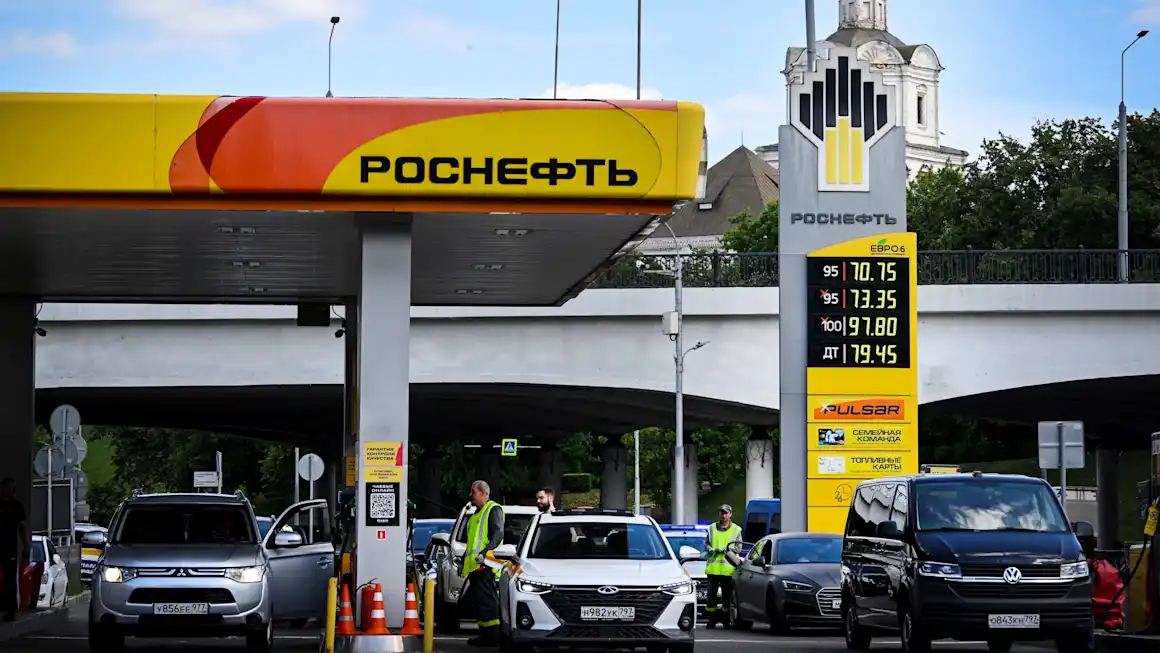
Rosneft, the Russian state-owned oil giant, has implemented immediate restrictions on fuel sales to mitigate disruptions caused by recent attacks on domestic refining facilities. The company announced that customers are now limited to purchasing a maximum of 30 litres of petrol per vehicle in urban areas. For drivers on highways, the limit is slightly higher, capped at 50 litres per transaction. These measures are designed to prevent hoarding and ensure a more equitable distribution of available fuel stocks during a period of supply chain volatility.
The decision comes in the wake of a series of targeted strikes by Ukrainian forces against Russian energy infrastructure. These attacks have reportedly damaged several key oil refineries, reducing the nation's overall capacity to process crude oil into usable motor fuels. As a result, regional shortages have begun to emerge, prompting state-controlled enterprises like Rosneft to take direct control over retail distribution to maintain stability.
Impact on Regional Supply Chains
While the specific scope of the damage remains under review, the introduction of per-vehicle limits indicates a significant strain on the supply side of the market. Rosneft’s directive applies to its extensive network of service stations across major Russian cities and along major highway routes. This widespread application suggests that the disruption is not isolated to a single region but is affecting the broader national logistics network.
Industry observers note that such rationing measures are typically a temporary response to acute supply shocks. However, the persistence of these limits could depend on the speed of repairs to the affected refineries and the resilience of the transportation network used to move remaining fuel stocks. The Russian government has not yet issued a separate directive to support Rosneft, leaving the state-owned enterprise to manage the situation through its own operational protocols.
The move highlights the ongoing vulnerability of Russia's energy sector to asymmetric warfare tactics. Ukrainian drone campaigns have increasingly targeted industrial sites within Russian borders, aiming to degrade the economic and military logistical capabilities of the state. The fuel rationing by Rosneft serves as a tangible indicator of the physical toll these strikes are taking on the ground.
Market and Consumer Implications
For consumers, the new limits mean that filling a standard car tank may require multiple visits to different service stations or waiting for subsequent days. This inconvenience could lead to longer queues at pumps, particularly in densely populated urban centers. The retail sector is monitoring the situation closely to assess whether the rationing will persist beyond the immediate crisis or become a longer-term operational constraint.
Financial markets often view disruptions in Russian fuel supply as a factor that could influence global energy prices, although Russia remains a major exporter of crude oil. The domestic rationing of petrol does not directly impact export volumes, but it underscores the internal pressures facing the Russian economy. Investors and analysts are watching for any signs of broader economic strain or government intervention that might signal a more severe underlying problem within the energy sector.
As of now, Rosneft has not provided a timeline for when the restrictions will be lifted. The company is likely coordinating with other state entities and logistics providers to optimize the distribution of available fuel. The situation remains fluid, with the duration of the rationing dependent on the pace of infrastructure recovery and the frequency of future attacks.
Key takeaways
- Rosneft has limited petrol sales to 30 litres per car in Russian cities.
- The fuel purchase limit on highways is set at 50 litres per vehicle.
- The rationing measures are a direct response to Ukrainian strikes on refineries.
- State-owned Rosneft is managing the distribution to prevent shortages and hoarding.
- The restrictions apply across major urban and highway service station networks.





