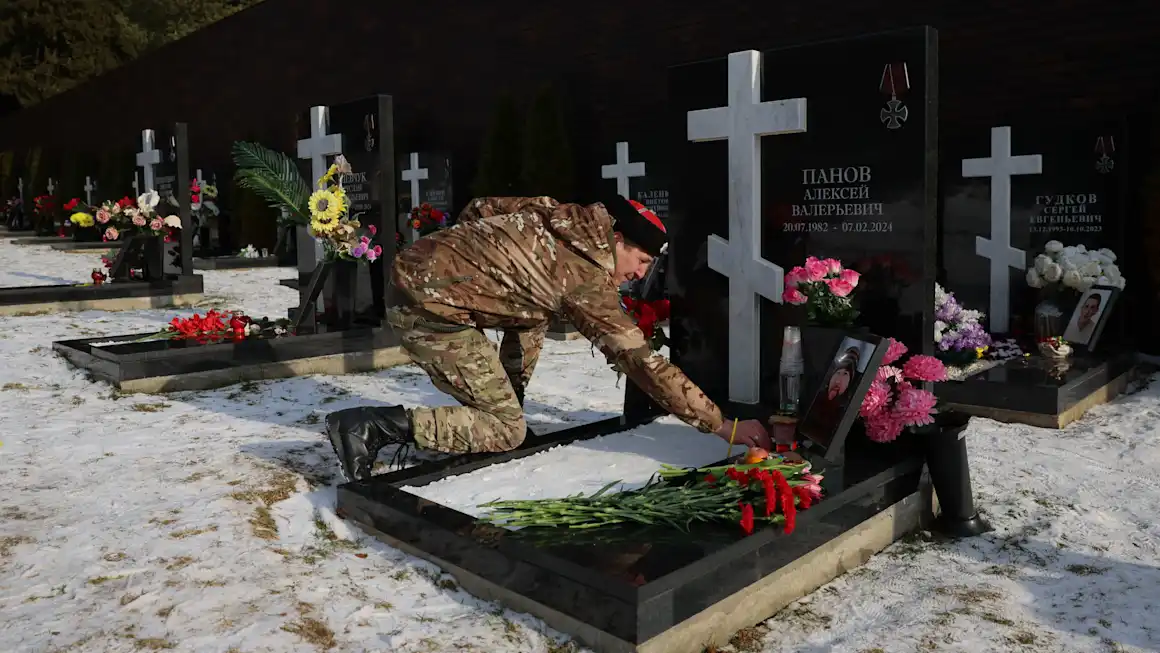
Documented Toll of the Conflict
Official data released by the Russian government indicates that the conflict in Ukraine has resulted in the deaths of 489,800 Russian military personnel. This figure, derived from statistical agency reports, represents a substantial portion of the forces deployed since the full-scale invasion began in February 2022. The revelation underscores the severe attrition rates faced by Moscow’s armed forces as they attempt to secure territorial gains in eastern and southern Ukraine.
The cumulative death toll has surpassed previous estimates, highlighting the intense nature of the fighting on the battlefield. While Russian authorities have historically been opaque regarding specific casualty figures, this latest data point from the statistical agency provides a concrete metric of the human cost incurred by the Kremlin. The number reflects not only those killed in direct combat but also those who succumbed to wounds sustained during operations.
Strategic Gains Amidst Heavy Losses
Despite the staggering number of fatalities, the report notes that Moscow’s forces have made progress on a few small fronts. This suggests a strategic trade-off where territorial advancement is being pursued at a high human price. The advance has been gradual and localized, indicating that while Russian troops are moving forward in specific sectors, the overall momentum of the war has not shifted dramatically in favor of a rapid, decisive victory.
The juxtaposition of massive casualties with limited territorial gains raises questions about the efficiency of military operations and the sustainability of the current strategy. Analysts note that such high attrition rates can deplete experienced personnel, potentially affecting the long-term operational capacity of the Russian military. The focus on small, incremental gains suggests a war of attrition rather than a blitzkrieg-style offensive.
The data also reflects the broader geopolitical context of the conflict. As Western nations continue to supply Ukraine with military aid, the pressure on Russian forces increases, leading to higher casualty rates. The Russian government’s acknowledgment of these losses may signal a shift in domestic narrative management, though the full implications for public opinion within Russia remain to be seen.
Implications for Future Operations
The release of these figures comes at a critical juncture in the war. With winter approaching and the battlefield stalemate persisting, both sides are preparing for prolonged engagement. The high number of casualties may force the Russian military to reconsider its recruitment strategies and reliance on mobilized troops. There are indications that the government may need to draw upon deeper reserves of manpower to sustain its offensive capabilities.
International observers are closely monitoring these developments for insights into Russia’s military resilience. The ability to absorb such losses while maintaining a war effort speaks to the Kremlin’s willingness to prioritize territorial objectives over human cost. However, the long-term sustainability of this approach is subject to debate among military experts and political analysts.
As the war continues, the full extent of the human toll may become even more apparent. The statistical data serves as a grim reminder of the devastation wrought by the conflict. For the international community, these figures highlight the urgent need for diplomatic solutions to end the violence and prevent further loss of life. The path forward remains uncertain, with both sides entrenched in a grueling struggle that shows no signs of abating.
Key takeaways
- Official Russian data confirms 489,800 military deaths in the war in Ukraine.
- The casualty figure reflects the severe attrition rates on the battlefield since 2022.
- Moscow’s forces have advanced on a few small fronts despite the high human cost.
- The data suggests a strategy of territorial gain at the expense of significant manpower loss.
- High casualties may impact Russia's long-term military operational capacity.





