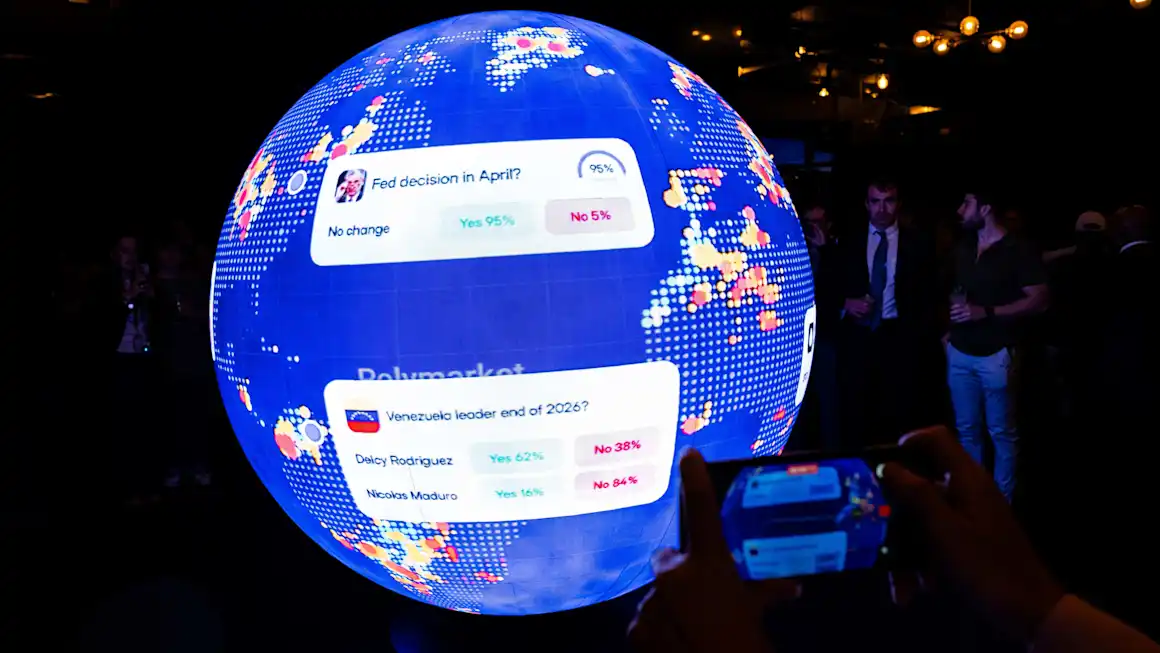
The Gamification of Political Intelligence
Washington, D.C., has long been characterized by a dense network of insiders, lobbyists, and political operatives who possess non-public information regarding legislative outcomes and electoral shifts. This unique ecosystem, where knowledge is often the most valuable currency, is now intersecting with a rapidly expanding industry: prediction markets. As the midterm elections draw closer, the volume of bets placed on political outcomes has surged, effectively turning the nation's capital into a high-stakes casino where political intelligence is monetized through digital wagering platforms.
The core appeal of these markets lies in their ability to aggregate information. Unlike traditional polling, which captures sentiment at a single point in time, prediction markets reflect real-time expectations based on financial incentives. Participants stake capital on specific political events, such as which party will control the House of Representatives or the outcome of key gubernatorial races. The price of these contracts fluctuates based on supply and demand, providing a continuous, data-rich feed of what participants believe will happen next in the political arena.
This trend is particularly pronounced in the current election cycle, where the line between financial speculation and political analysis has blurred. Investors and casual bettors alike are utilizing these platforms to hedge risks or speculate on outcomes, driven by the perception that they have access to superior information. In a city where almost everyone is privy to some kind of inside information, the barrier to entry for making informed bets has lowered, encouraging a broader segment of the population to engage in political gambling.
The surge in activity is not merely a reflection of increased interest in politics, but a structural shift in how political risk is assessed and traded. Traditional financial markets have begun to incorporate data from prediction markets as a leading indicator for market movements. For instance, shifts in the probability of a regulatory change or a legislative veto can signal potential impacts on specific sectors, prompting institutional investors to adjust their portfolios accordingly. This symbiotic relationship between political betting and traditional finance underscores the growing influence of prediction markets on economic decision-making.
Critics and observers alike note that the gamification of politics raises complex questions about the integrity of the democratic process. When political outcomes become tradable assets, there is a potential conflict of interest for those who hold significant positions in these markets. The incentive to influence outcomes, rather than merely predict them, introduces a new variable into the political equation. While most participants are likely motivated by profit rather than political ideology, the sheer volume of money involved can amplify the impact of speculative behavior on public discourse.
Furthermore, the accessibility of these platforms has democratized political speculation in ways previously unimaginable. Retail investors, previously excluded from the high-stakes world of political derivatives, can now place small bets on elections with the same ease as trading stocks. This accessibility has fueled the growth of the industry, as platforms compete for user attention with user-friendly interfaces and real-time data feeds. The result is a vibrant, albeit controversial, marketplace where political knowledge is commodified and traded openly.
As the midterm elections approach, the volume of activity on these platforms is expected to reach new heights. The convergence of political insider information and financial speculation creates a unique dynamic that challenges traditional notions of political analysis. Whether viewed as a valuable source of predictive data or a problematic gamification of democracy, the rise of prediction markets in Washington represents a significant shift in the political landscape. The coming months will likely see increased scrutiny of these platforms and their role in shaping public perception of electoral outcomes.
Market Dynamics and Future Implications
The integration of prediction markets into the mainstream financial consciousness highlights a broader trend toward data-driven decision-making in politics. As more participants engage with these platforms, the accuracy of their predictions tends to improve, creating a self-correcting mechanism that rewards informed speculation. This dynamic has led some analysts to view prediction markets as a more reliable indicator of political outcomes than traditional polling methods, which can be subject to biases and non-response errors.
However, the reliance on these markets also introduces new risks. The potential for market manipulation, especially in the context of closely contested races, remains a concern. Regulators are beginning to take notice, with calls for greater oversight of prediction market platforms to ensure fair play and transparency. The lack of uniform regulatory standards across different jurisdictions adds another layer of complexity to the operation of these markets, potentially limiting their growth or exposing participants to legal risks.
In conclusion, the transformation of Washington into a political casino is a testament to the power of market mechanisms to aggregate information and drive behavior. As the midterms approach, the interplay between insider information, financial speculation, and democratic processes will continue to evolve, offering both opportunities and challenges for investors, policymakers, and the public alike.
Key takeaways
- Betting on political outcomes has surged in Washington as midterm elections approach, leveraging widespread access to insider information.
- Prediction markets aggregate real-time expectations, providing a continuous feed of anticipated political events based on financial incentives.
- The gamification of politics raises questions about market integrity and potential conflicts of interest for participants with significant positions.
- Traditional financial markets are increasingly using prediction market data as a leading indicator for regulatory and legislative changes.
- Retail investor accessibility has fueled industry growth, allowing casual bettors to trade political outcomes with ease.





