Divergent Visions on Economic Justice
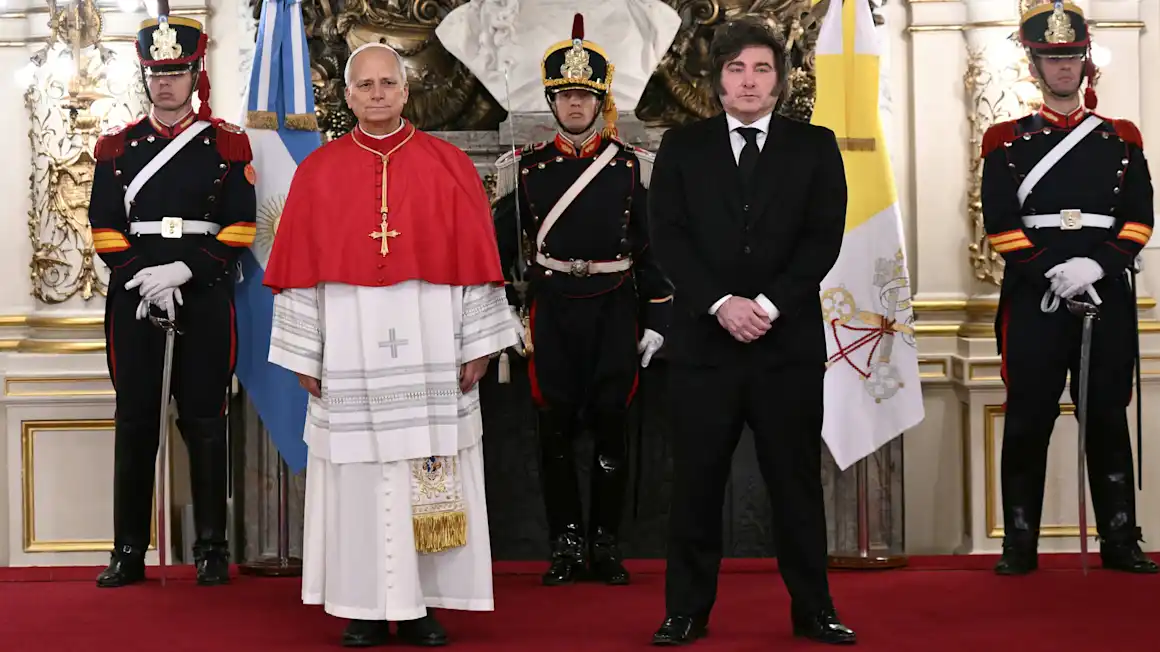
A significant rhetorical clash has emerged between the Vatican and the Argentine government, centering on competing philosophies regarding economic policy and social welfare. Pope Leo III, during a recent address, delivered a message that many observers and political analysts have interpreted as a veiled but pointed criticism of President Javier Milei’s strict austerity measures. The Pontiff’s speech emphasized themes of economic justice and the moral obligations of governance, creating a sharp contrast with the libertarian economic strategies currently being implemented in Buenos Aires.
The tension highlights a broader ideological divide within Argentina, where the government has prioritized fiscal discipline and market liberalization. President Milei’s administration has pursued aggressive cuts to public spending and the deregulation of various sectors in an effort to combat chronic inflation and stabilize the national currency. These policies, while aimed at long-term macroeconomic health, have resulted in immediate short-term hardships for many citizens, a reality that the Vatican’s latest messaging appears to address indirectly.
Analysts note that the Pope’s words resonate with a segment of the Argentine population that feels the brunt of the economic adjustment. The Pontiff’s focus on protecting the vulnerable and ensuring equitable distribution of resources stands in stark opposition to the trickle-down economics often associated with Milei’s approach. This divergence has turned the religious leader into a symbolic figurehead for those opposing the current administration's rapid reforms, elevating the stakes of the political discourse.
Implications for Government Relations
The Vatican’s stance is particularly sensitive given the historical and cultural significance of the Catholic Church in Argentina. While the Holy See maintains diplomatic neutrality, such high-profile commentary from the Pope is rare and signals a deep concern regarding the social impact of current policies. The Argentine government has not yet issued a formal rebuttal, but the friction suggests that future interactions between the Vatican and Buenos Aires may require careful diplomatic navigation to avoid further public disputes.
President Milei, known for his uncompromising rhetoric and libertarian ideology, has previously clashed with various institutions he views as obstacles to economic freedom. The administration argues that short-term pain is necessary for long-term gain, citing the need to reduce the fiscal deficit and restore confidence in the peso. However, the Pope’s intervention adds a moral dimension to the economic debate, challenging the government to justify its policies not just on economic metrics, but on their impact on human dignity and social cohesion.
Observers suggest that this clash could influence public opinion and potentially impact the political landscape in the lead-up to future elections. The Pope’s ability to shape moral discourse means that the government’s policies are now being judged through a dual lens of economic efficiency and social ethics. This dual scrutiny places additional pressure on the Milei administration to demonstrate that its austerity measures do not disproportionately harm the most vulnerable sectors of society.
Looking Ahead
As the economic reforms continue to take effect, the dialogue between the Vatican and the Argentine government is likely to remain a focal point of national conversation. The administration will need to balance its commitment to fiscal discipline with the need to address social concerns raised by the Church and other civil society groups. The outcome of this ideological battle will have lasting implications for Argentina’s political stability and its relationship with the international community, particularly those institutions that prioritize social justice alongside economic growth.
Key takeaways
- Pope Leo III’s recent speech included remarks interpreted as criticism of President Javier Milei’s austerity policies.
- The Pontiff emphasized economic justice, contrasting with the government's focus on fiscal discipline and market liberalization.
- The Vatican’s stance highlights a growing ideological divide between the Catholic Church and the Argentine administration.
- President Milei’s reforms aim to combat inflation but have resulted in short-term economic hardships for many citizens.
- The clash adds a moral dimension to the economic debate, potentially influencing public opinion and political dynamics.





