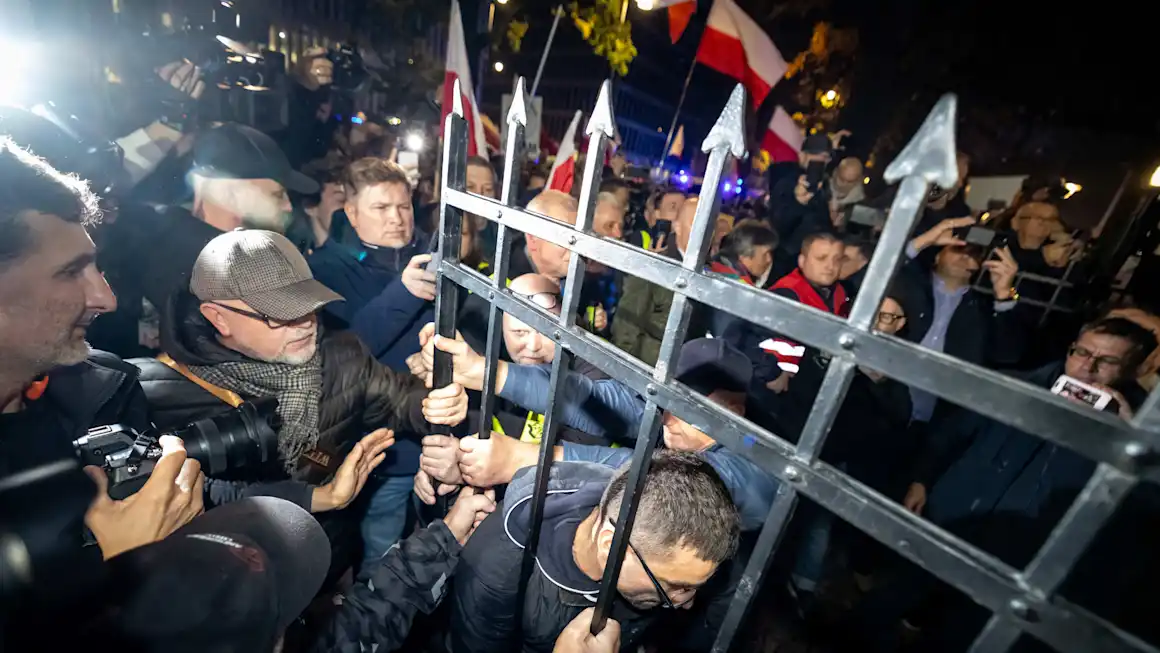
Escalating Dispute Over Judicial Power
Poland is currently navigating a significant political and legal crisis characterized by an intensifying dispute between the country's President and Prime Minister. At the heart of this conflict is the control and composition of the constitutional court, a pivotal institution responsible for upholding the nation's legal framework. The clash has escalated from a procedural disagreement into a bitter political battle, drawing international attention to the stability of Poland's democratic institutions.
The core of the disagreement revolves around appointments to the constitutional court. These appointments are critical because they determine how the highest legal interpretations in the country are made, directly impacting the balance of power between the executive, legislative, and judicial branches. The President and the Prime Minister are currently embroiled in a struggle to influence these key positions, leading to a standoff that has paralyzed normal judicial functions.
This dispute is not merely a bureaucratic hurdle but a fundamental question regarding the rule of law in Poland. The rule of law is a cornerstone of the European Union's membership criteria, and any perceived erosion of judicial independence raises serious concerns among EU partners. The current situation suggests a weakening of the checks and balances that are essential for a functioning democracy, as the executive branch appears to be challenging the autonomy of the judiciary.
Implications for Governance and Stability
The suspension of top judges, as reported, indicates a severe breakdown in the normal operations of the judicial system. When top judges are removed or suspended amidst such a political dispute, it often signals an attempt by the executive to align the judiciary with political interests. This move can have far-reaching consequences for legal certainty, investor confidence, and the protection of individual rights within the country.
Observers note that the battle over the constitutional court has become a proxy war for broader political control. The President and the Prime Minister, who are typically part of the same political coalition or government structure, are finding themselves on opposite sides of this critical issue. This internal division within the government highlights the depth of the crisis and suggests that previous agreements on judicial appointments have collapsed entirely.
The implications of this standoff extend beyond domestic politics. As Poland is a key player in Central European geopolitics, the instability caused by this judicial crisis could affect its relationships with neighboring countries and international organizations. The uncertainty surrounding the constitutional court's legitimacy may lead to prolonged legal battles and political gridlock, hindering the government's ability to implement policies and address other national challenges.
Looking Ahead: Uncertainty Lingers
As the dispute continues, the future of Poland's constitutional court remains uncertain. The outcome of this battle will likely define the country's legal landscape for years to come. If the current trajectory continues, there is a risk that the constitutional court may lose its credibility as an independent arbiter of the law. This could lead to a situation where judicial decisions are viewed as politically motivated rather than legally grounded.
Stakeholders, including businesses, civil society organizations, and international partners, are watching closely. The resolution of this crisis will require a dialogue between the President and the Prime Minister, as well as potential mediation from other democratic institutions or international bodies. Without a clear path forward, the rule of law in Poland remains under threat, and the political elite must address the underlying causes of this division.
The international community has expressed concern over the developments in Poland. The European Union has previously warned Poland about the importance of respecting judicial independence. Continued disregard for these norms could result in further diplomatic tensions and potential sanctions. The current suspension of judges serves as a stark reminder of the fragility of democratic institutions in the face of political ambition.
Key takeaways
- Poland's President and Prime Minister are in a bitter dispute over appointments to the constitutional court.
- The conflict has escalated to the point where top judges are being suspended, signaling a severe judicial crisis.
- The battle over the constitutional court raises significant concerns about the rule of law in Poland.
- This internal political rift threatens the independence of the judiciary and the stability of the government.
- International observers and the European Union are closely monitoring the situation due to its implications for democratic norms.





