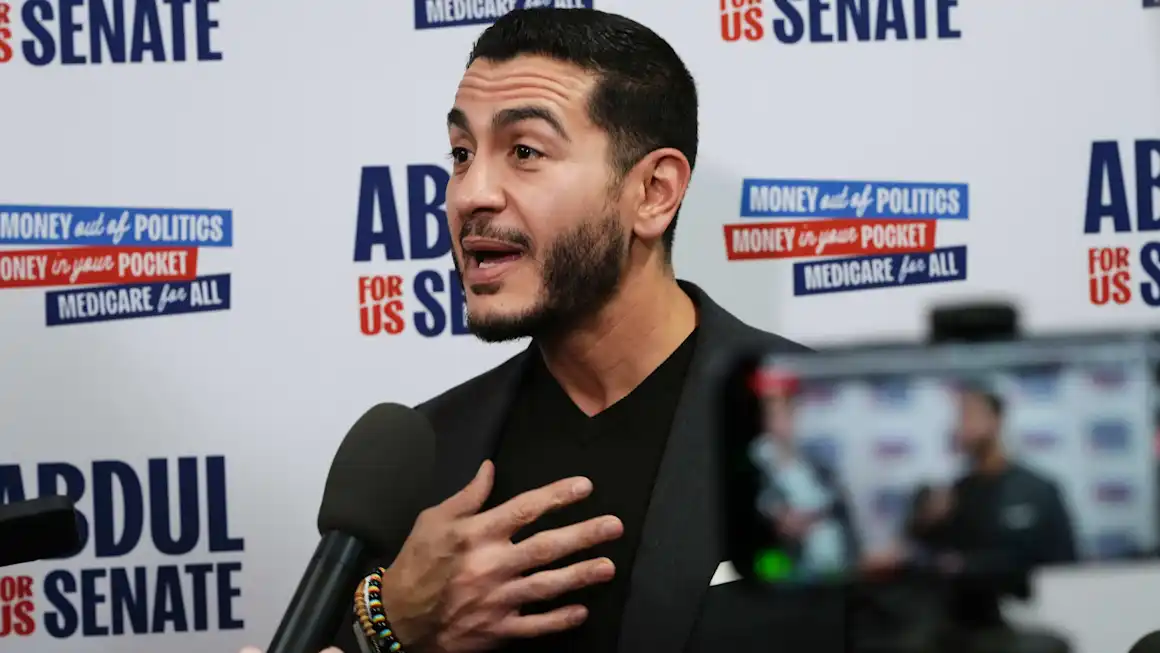
A Campaign Rift Widens
A significant political fracture has emerged within Michigan’s Democratic primary, threatening to disrupt the party's cohesion in a high-stakes Senate race. Abdul El-Sayed, a prominent candidate in the contest, has formally disinvited his former primary rival, Haley Stevens, from an upcoming campaign event. This move marks a sharp escalation in a public war of words between the two politicians, signaling deep divisions that extend beyond standard political rivalry.
The core of the conflict lies in divergent positions regarding the geopolitical situation in Israel. The disinvitation is a direct consequence of recent statements and actions by Stevens that El-Sayed found objectionable, highlighting how foreign policy issues are increasingly becoming flashpoints in domestic electoral politics. The incident underscores the delicate balancing act candidates must perform when navigating complex international conflicts while maintaining domestic political alliances.
El-Sayed’s decision to exclude Stevens from his campaign events suggests that the rift is no longer merely rhetorical but has tangible operational consequences for both campaigns. By removing a key figure from his event, El-Sayed is drawing a clear line in the sand, likely appealing to specific segments of the Democratic base that hold strong views on the Israel-Hamas conflict. This move risks alienating other parts of the coalition that may support Stevens or prefer a more unified front against Republican opponents.
Implications for Democratic Unity
The feud between El-Sayed and Stevens is particularly concerning for the broader Democratic Party in Michigan, a state that has become a crucial battleground in national elections. Internal discord can weaken campaign messaging and reduce fundraising efficiency, as resources are diverted from attacking the opposition to managing internal conflicts. The public nature of this dispute forces voters to choose sides, potentially depressing turnout among moderate Democrats who may be uncomfortable with the aggressive rhetoric.
Stevens, a former U.S. Representative, brings significant name recognition and fundraising experience to the race. Her exclusion from El-Sayed’s events could lead to a fragmented field, where donors and volunteers are divided between competing camps. This fragmentation may inadvertently benefit Republican candidates who are waiting in the wings, as a divided Democratic front often struggles to mobilize the necessary turnout to secure victory in swing districts and statewide races.
The situation also reflects a broader trend in American politics where international conflicts are increasingly polarizing domestic political landscapes. Candidates are under pressure to take definitive stances on issues like the war in Gaza, even when such positions may alienate portions of their own party. The El-Sayed-Stevens feud serves as a case study in how these external pressures can fracture internal party structures before an election is even held.
What Happens Next
As the primary season progresses, it remains to be seen whether this rift will widen or if diplomatic efforts will be made to heal the divide. Other candidates in the Democratic primary may attempt to position themselves as unifying figures, but the current trajectory suggests that the conflict over Israel will remain a central theme in the campaign discourse. The outcome of this feud could influence the selection of the party’s nominee and, subsequently, the general election strategy in Michigan.
Observers will be watching closely to see if Stevens launches a counter-campaign or if she attempts to reconcile with El-Sayed. The actions taken by both parties in the coming weeks will define the nature of the Democratic primary in Michigan. For now, the disinvitation stands as a stark reminder of the fragility of political alliances in times of geopolitical tension.
Key takeaways
- Abdul El-Sayed has disinvited Haley Stevens from a campaign event, escalating their public dispute.
- The conflict stems from differing viewpoints regarding Israel and the ongoing conflict in the region.
- The feud threatens Democratic unity in Michigan, a key swing state in upcoming elections.
- Public divisions between major candidates can weaken campaign messaging and donor cohesion.
- The incident highlights the growing impact of foreign policy on domestic electoral politics.





