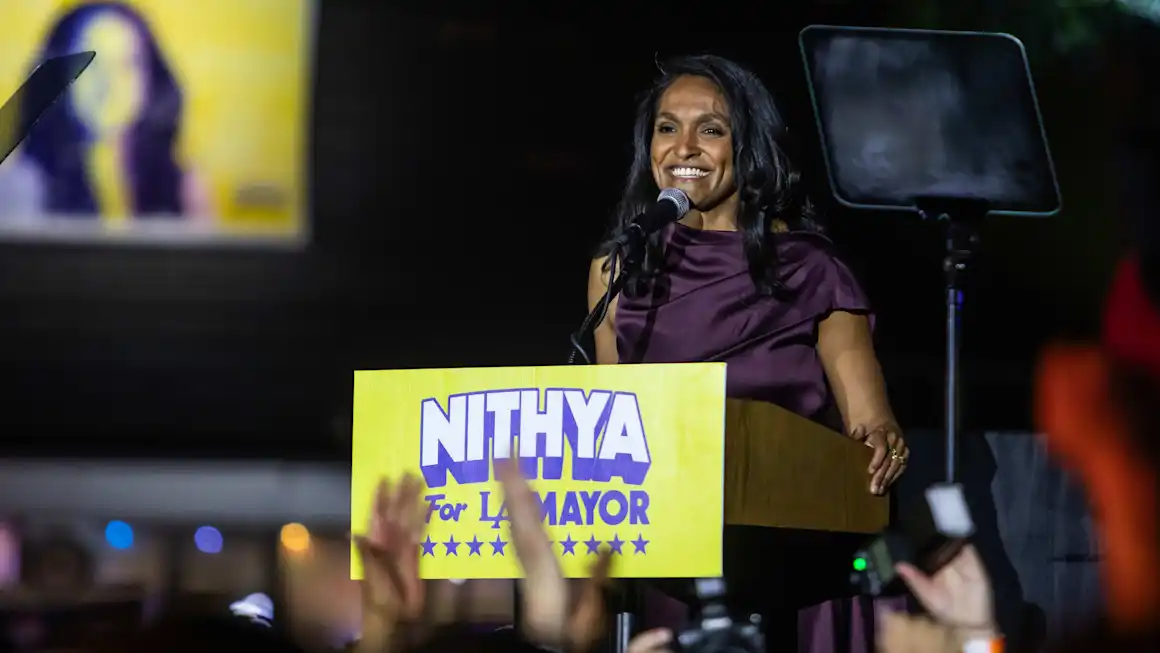
A Shift in Los Angeles Leadership
Nithya Raman, a democratic socialist, has successfully secured the position of mayor in Los Angeles. This election result represents a notable transformation in the governance of one of the United States' largest cities. Raman's victory follows a broader trend of progressive candidates gaining ground in major metropolitan areas across the country. Her election signals a potential shift in policy priorities and political direction for the city.
The outcome of the Los Angeles mayoral race has drawn attention from political observers nationwide. Raman's win is part of a larger pattern of electoral success for progressive figures in recent elections. This trend includes Zohran Mamdani's rise in New York, as well as resounding victories by other progressives in Washington and Providence. These concurrent successes suggest a growing influence of democratic socialist ideas in urban politics.
Context of Progressive Gains
Raman's election does not occur in isolation. It is closely linked to similar political shifts in other major cities. In New York, Zohran Mamdani's rise has highlighted the increasing appeal of progressive platforms among voters. Similarly, Washington and Providence have seen significant victories for progressive candidates. These wins indicate a coordinated or at least synchronized movement toward more left-leaning policies in urban centers.
The alignment of these victories suggests that voters in major cities may be increasingly responsive to issues such as housing affordability, healthcare access, and economic inequality. Raman's campaign likely capitalized on these concerns, positioning herself as a candidate who could address these challenges through progressive policies. Her success in Los Angeles, a city with its own complex set of issues, underscores the potential for such platforms to resonate with a broad electorate.
Political analysts note that the rise of democratic socialists in local elections can have significant implications for national politics. These victories often serve as barometers for shifting public sentiment on key issues. They also provide a platform for progressive ideas to gain traction and potentially influence broader policy debates. Raman's election may therefore be seen as a precursor to further progressive gains in future elections.
Implications for Los Angeles
As Los Angeles prepares for a new mayor, the focus will likely turn to the specific policies Raman intends to pursue. Her victory suggests that voters are eager for change and are willing to support candidates who challenge the status quo. The city's existing challenges, including homelessness, traffic congestion, and public safety, will likely be addressed through a progressive lens.
The transition of power in Los Angeles will be closely watched by political strategists and policy experts. Raman's administration will face the task of translating campaign promises into actionable policies. The success or failure of these initiatives could have lasting effects on the city's development and the broader political landscape.
Key takeaways
- Nithya Raman, a democratic socialist, has been elected mayor of Los Angeles.
- Her victory is part of a broader trend of progressive wins in major US cities.
- Zohran Mamdani's rise in New York and victories in Washington and Providence highlight this shift.
- The election suggests growing voter support for progressive policies in urban areas.
- Raman's win may influence national political debates and future electoral strategies.





