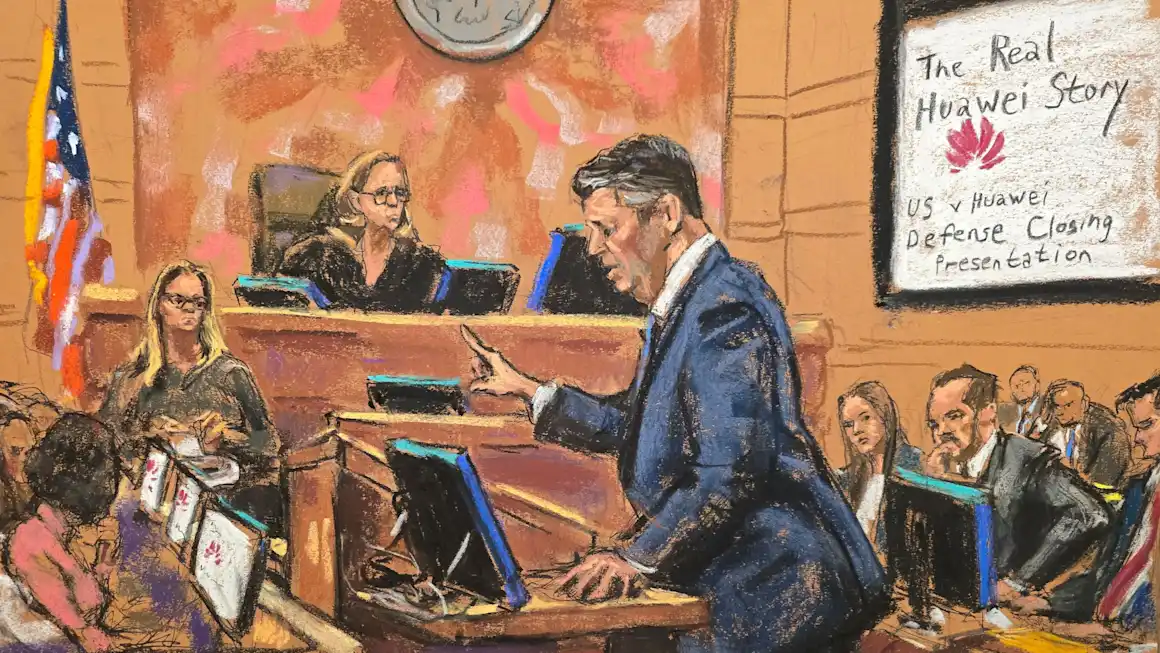
Conviction Marks End of Long Legal Battle
A federal jury in the United States has delivered a verdict against Huawei Technologies Co., finding the Chinese telecommunications giant guilty of conspiracy to commit bank fraud and wire fraud. The conviction concludes a protracted eight-year legal struggle between federal prosecutors and the multinational technology corporation, signaling a significant victory for the justice department in its efforts to hold foreign entities accountable for violating US laws. The verdict addresses long-standing allegations that Huawei engaged in deceptive practices to defraud financial institutions and circumvent international sanctions regimes.
The trial, which captivated attention in the tech and geopolitical sectors, centered on the company's alleged efforts to conceal its involvement in Iran and North Korea despite strict US embargoes. Prosecutors presented evidence suggesting that Huawei executives orchestrated a complex scheme to evade sanctions by using front companies and falsifying documentation. The jury's decision validates the government's position that the company's actions were not merely regulatory oversights but deliberate attempts to bypass legal restrictions designed to protect national security and economic interests.
Details of the Alleged Scheme
Central to the prosecution's case was the testimony regarding the company's dealings with Iranian entities. Investigators alleged that Huawei conspired to defraud US banks by submitting false statements to financial institutions to maintain banking relationships that were prohibited under US sanctions. The government argued that the company systematically misled banks about the true nature of its transactions and the involvement of sanctioned parties, thereby exposing those financial institutions to legal risk and potential penalties.
Furthermore, the case highlighted the broader context of corporate espionage and intellectual property theft that has plagued the relationship between US tech firms and Chinese competitors. While the specific charges focused on fraud and sanctions evasion, the trial shed light on the aggressive tactics employed by Huawei to gain competitive advantages. These included allegations of stealing trade secrets and using compromised devices to infiltrate corporate networks, tactics that have fueled geopolitical tensions and led to increased scrutiny of Chinese technology companies in Western markets.
The conviction comes at a time when the US government has intensified its campaign against perceived threats from Chinese technology firms. The case serves as a precedent for how aggressively the justice department will pursue entities that violate sanctions, even when those entities are based abroad. Legal experts note that the verdict underscores the extraterritorial reach of US law and the severe consequences for companies that fail to comply with regulatory frameworks, regardless of their headquarters location.
Implications for Huawei and the Industry
Following the verdict, Huawei faces significant legal repercussions, including potential fines and imprisonment for individuals convicted in the case. The company has stated its intention to appeal the decision, arguing that the evidence presented was insufficient and that the charges were politically motivated. The appeal process could extend the legal limbo for the company, delaying final sentencing and keeping the issue in the public eye for years to come.
For the broader telecommunications industry, the verdict reinforces the importance of strict compliance with international sanctions and anti-money laundering regulations. Financial institutions and tech firms are now more likely to adopt rigorous due diligence protocols to avoid similar legal pitfalls. The case also serves as a warning to other multinational corporations operating in sensitive geopolitical regions, highlighting the risks associated with navigating complex regulatory environments.
Observers note that the conviction may further isolate Huawei in Western markets, where trust in Chinese technology is already low. The company's efforts to expand its 5G infrastructure and consumer electronics business in the US and allied nations have been hampered by security concerns and political pressure. This legal defeat may complicate Huawei's strategy to rebuild its global footprint, as potential partners and customers weigh the reputational and legal risks associated with doing business with the firm.
Key takeaways
- A US federal jury has convicted Huawei of conspiracy to commit bank fraud and wire fraud after an eight-year legal battle.
- The verdict centers on allegations that Huawei used front companies and false statements to evade US sanctions on Iran and North Korea.
- Prosecutors successfully argued that the company deceived financial institutions, exposing them to legal risks.
- Huawei plans to appeal the conviction, maintaining that the charges were politically motivated.
- The case sets a precedent for the extraterritorial application of US sanctions law against foreign corporations.





