Market Resilience Amidst Turbulent US Trading
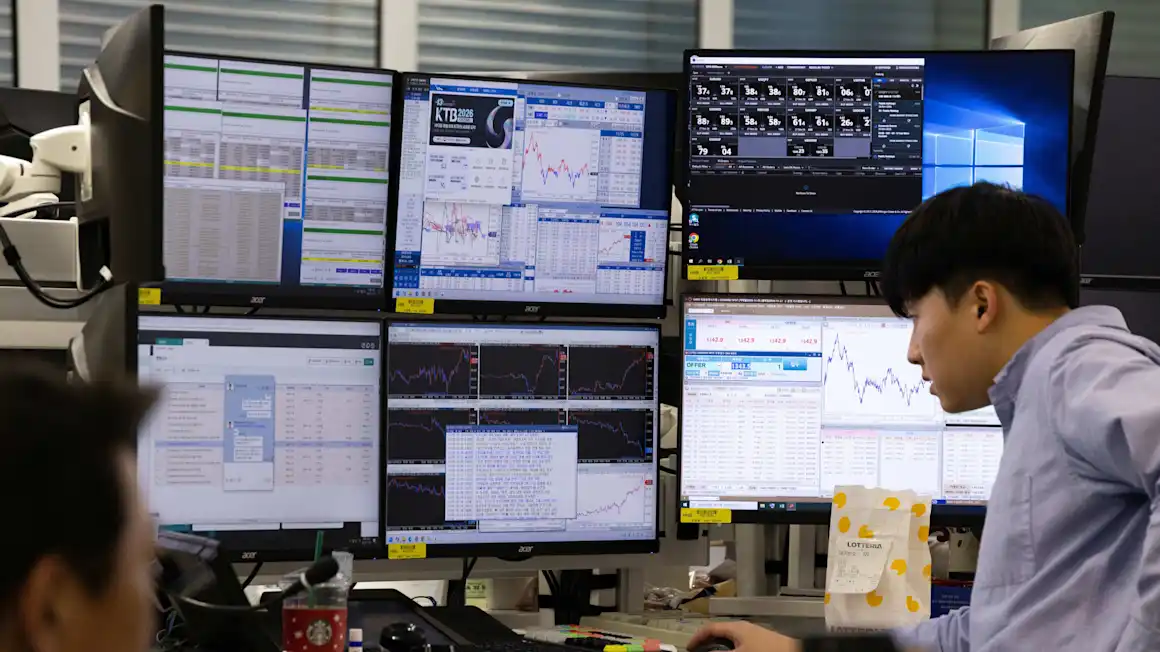
Global equity markets concluded the latest trading session in a stable position, effectively absorbing the volatility witnessed in United States exchanges. The steadiness observed across international indices stands in contrast to the sharper fluctuations seen on Wall Street, where investor sentiment has been heavily influenced by renewed debates concerning the longevity of the current artificial intelligence investment cycle. While US markets experienced significant swings, international hubs in Europe and Asia maintained more composed trajectories, suggesting a divergence in market psychology or sector exposure between regions.
The primary catalyst for the recent turbulence in US trading was the growing apprehension among institutional and retail investors regarding the sustainability of the AI boom. After months of robust gains driven by expectations of transformative productivity improvements from generative AI technologies, market participants are now engaging in a rigorous reassessment of valuation levels. This shift in sentiment has led to increased selling pressure in technology-heavy indices, particularly affecting companies that have seen their valuations expand significantly on the back of AI-related narratives.
Tech shares, which have been at the forefront of the market's rally, have been hit hardest by these fears. The sector, often viewed as a bellwether for technological innovation and future growth, is currently navigating a period of heightened scrutiny. Investors are questioning whether the current pace of adoption and revenue generation from AI initiatives can justify the premium valuations assigned to major tech conglomerates. This skepticism has triggered a wave of profit-taking and defensive positioning, contributing to the overall volatility observed in the broader market.
The concerns over AI sustainability are not isolated to individual stocks but are rippling through the broader technology sector. Analysts note that the market is undergoing a correction phase where speculative enthusiasm is being tempered by a demand for concrete earnings evidence. Companies that have announced significant investments in AI infrastructure but have yet to demonstrate tangible returns are facing particular pressure. This environment has led to a more cautious approach among investors, who are increasingly prioritizing fundamentals over growth narratives.
Despite the headwinds facing the technology sector, global markets have shown a degree of resilience. This stability can be attributed to diversification benefits and the performance of other sectors such as industrials, healthcare, and consumer staples, which have not been subjected to the same level of speculative frenzy. Investors appear to be rotating capital away from high-growth tech stocks and into more defensive or value-oriented assets, a move that has helped cushion the blow from the tech selloff.
Implications for the AI Investment Thesis
The current market dynamics highlight a critical juncture for the AI investment thesis. While the long-term potential of artificial intelligence remains widely acknowledged by industry experts, the short-term trajectory of stock prices is being dictated by near-term earnings expectations and macroeconomic conditions. The volatility observed in US trading serves as a reminder of the risks associated with investing in high-growth, high-valuation sectors. Investors are now more discerning, seeking companies that can provide clear pathways to monetizing AI technologies.
Looking ahead, market participants will be closely monitoring upcoming earnings reports and guidance from major tech companies. These disclosures will be crucial in determining whether the AI boom is indeed sustainable or if the current market corrections are indicative of a broader reassessment of tech valuations. Any deviation from expected growth metrics could exacerbate the current volatility, while strong results may help restore confidence and stabilize prices.
Furthermore, macroeconomic factors such as interest rates and inflation data continue to play a significant role in shaping market sentiment. Higher interest rates can increase the cost of capital for tech companies, which often rely on borrowing to fund expansive R&D and infrastructure projects. Consequently, any changes in monetary policy expectations could further influence the performance of the technology sector and, by extension, the broader global markets.
Broader Market Context and Outlook
The steady performance of global stocks amidst US volatility underscores the interconnected yet distinct nature of international markets. While US markets often set the tone for global equity trends, regional economic conditions and local policy decisions can mitigate or amplify these effects. In this instance, the resilience of non-US markets suggests that investors are finding opportunities outside the US tech sector, potentially diversifying their portfolios to manage risk more effectively.
As the market continues to digest the implications of the AI debate, traders are advised to remain vigilant. The potential for further volatility remains high, particularly if key economic data releases or corporate earnings reports fail to meet expectations. The coming weeks will be critical in determining whether the current correction is a temporary pause or the beginning of a more prolonged adjustment in tech valuations. Market participants will need to navigate this landscape with a focus on fundamental analysis and risk management.
Key takeaways
- Global stock markets remained stable following a period of high volatility in US equities.
- US tech shares experienced significant pressure due to investor doubts about the sustainability of the AI boom.
- Market participants are shifting focus from speculative growth narratives to concrete earnings evidence and fundamentals.
- International markets showed resilience, suggesting a rotation of capital into sectors outside of high-growth technology.
- Upcoming corporate earnings and macroeconomic data will be critical in determining the near-term trajectory of the technology sector.





