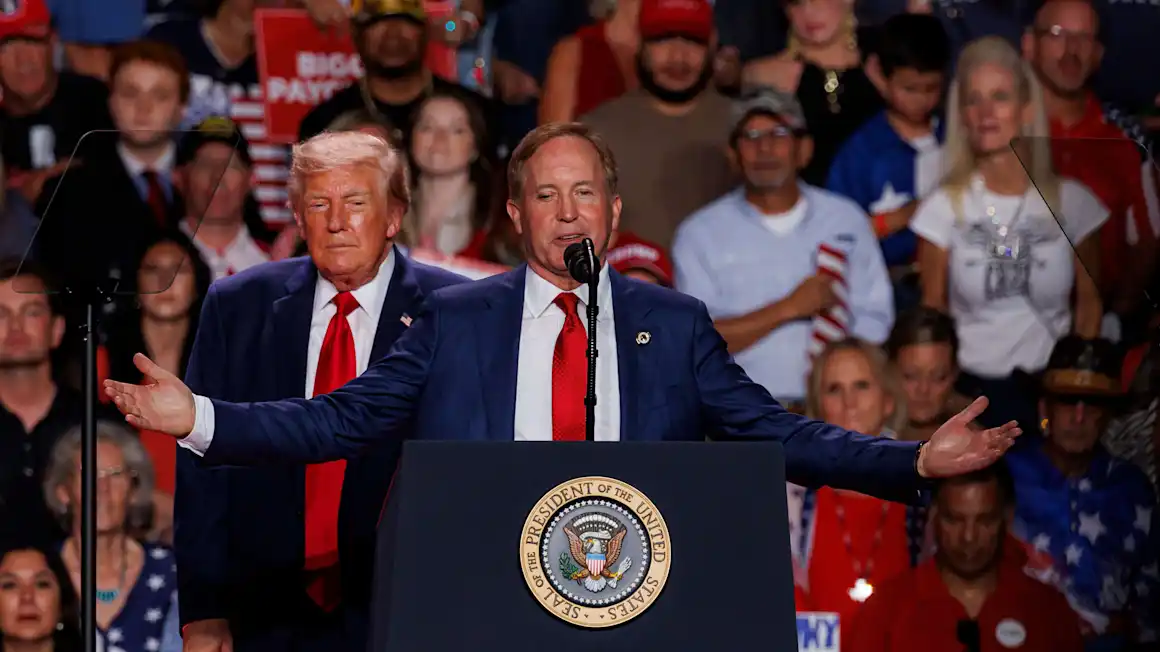
A High-Stakes Congressional Battleground
The political landscape in Texas is currently defined by a fierce and increasingly complex contest for the U.S. Senate seat. This race has evolved into a critical battleground, with significant implications for the broader balance of power in Washington. The outcome of this election is widely viewed as a potential determinant for which party controls the upper house of Congress, adding an layer of national scrutiny to the local campaign dynamics.
At the center of this contest is a candidate selected by former President Donald Trump, who has become the focal point of intense media and political attention. The selection of a figure described as scandal-prone has injected a volatile element into the race, drawing comparisons to broader national political trends. The candidate's history and recent actions have become a primary subject of debate, influencing voter sentiment and campaign strategies for both sides.
Opposing this Trump-backed candidate is a Democrat with a background in theology, often described in reports as a seminarian. This candidate brings a different narrative to the race, emphasizing personal history and moral framing in their platform. The contrast between the two candidates highlights a sharp ideological and stylistic divide, creating a unique dynamic that differs from typical partisan matchups in the state.
The Role of Scandal and Theatrics
The campaign has been characterized by what observers describe as "dirty tricks" and "MAGA theatrics," terms that suggest a departure from traditional political discourse. These elements have contributed to a bruising atmosphere, where personal attacks and dramatic political gestures are becoming commonplace. The presence of such tactics indicates a campaign strategy focused on mobilizing base voters through high-energy, controversial engagements.
Scandal has played a recurring role in the narrative surrounding the Trump pick. Past controversies have resurfaced, casting a shadow over the candidacy and providing ammunition for opponents. These issues are being leveraged by the Democratic campaign to question the suitability of the candidate for high office, while supporters attempt to dismiss them as politically motivated distractions.
Meanwhile, the theatrical elements of the campaign, often associated with the MAGA movement, have drawn attention to the performative aspects of modern politics. These events and statements are designed to generate headlines and maintain visibility, but they also risk alienating moderate voters. The interplay between scandal and spectacle creates a volatile environment that tests the resilience of both campaigns.
Implications for Congressional Control
The stakes of this election extend far beyond Texas. With the Senate control hanging in the balance, every seat is viewed as critical by both parties. A victory for the Trump pick could secure Republican control of the Senate, while a win for the seminarian Democrat would shift the balance toward Democratic leadership. This potential shift has heightened the focus on Texas, a state traditionally known for Republican dominance in federal races.
As the race progresses, the interaction between these two distinct candidates will continue to shape the political conversation. The use of aggressive tactics and the emphasis on personal backgrounds suggest a campaign that is as much about identity and narrative as it is about policy. The outcome will likely influence the political strategies of both parties in future elections, setting a precedent for how similar contests are conducted.
Key takeaways
- A high-stakes Texas Senate race features a Trump-picked candidate with a history of scandals against a Democrat with a theological background.
- The contest is viewed as pivotal for determining control of the U.S. Senate and, by extension, the upper house of Congress.
- Campaign dynamics are marked by allegations of dirty tricks and political theatrics associated with the MAGA movement.
- The ideological and stylistic contrast between the candidates highlights a sharp divide in the current political climate.
- The outcome of this race has significant national implications, potentially shifting the balance of power in Washington.





