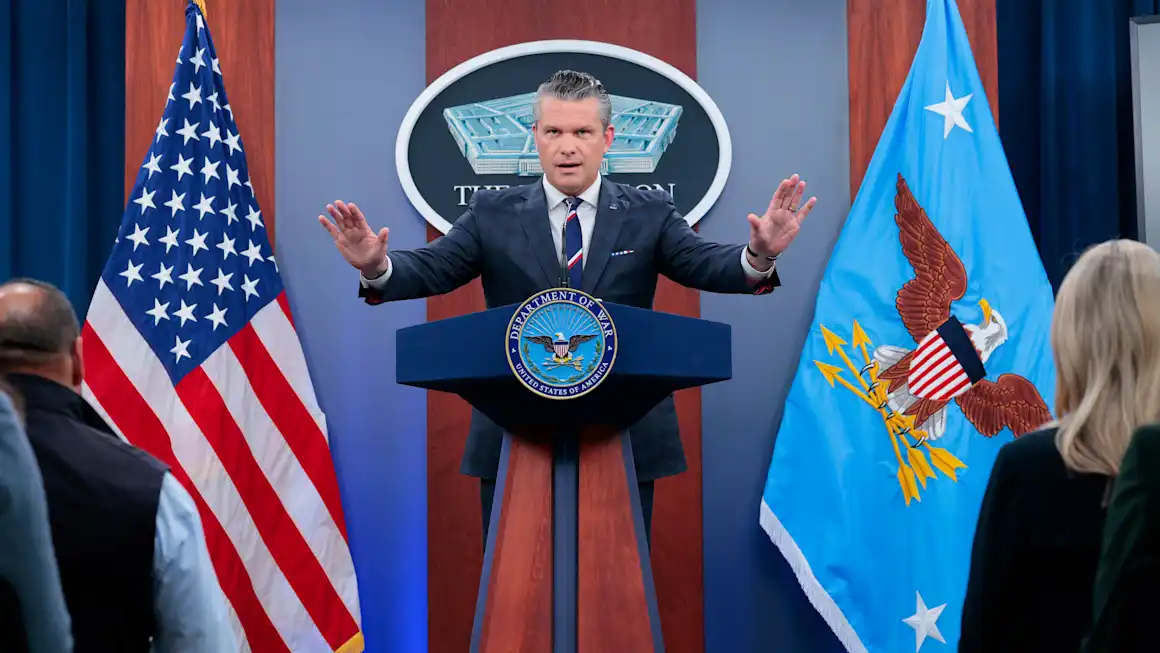
Political Pressure Mounts on Defense Secretary
US Defense Secretary Pete Hegseth is currently navigating a severe political crisis as he prepares to face an impeachment vote in Congress. The move comes in the wake of the Republican Party's defeat in the recent midterm elections, a result that has significantly altered the political landscape within the legislative branch. As the new Congress convenes, the balance of power has shifted, placing unprecedented scrutiny on the administration's key figures and their policy decisions. Hegseth's position is now under direct threat as lawmakers from the opposing party seek to hold the Department of Defense accountable for its actions and strategic direction.
The impeachment proceedings are closely tied to Hegseth's management of military operations, particularly regarding the conflict in Iran. Critics argue that the administration's approach has been flawed, while supporters maintain that the actions taken were necessary for national security. The defense secretary has been forced to publicly defend his record, emphasizing the complexities of international relations and the challenges faced by the military in the region. This defense has become a central theme of his public appearances and briefings as he attempts to mitigate the political fallout.
Strategic Defense of Iran Operations
At the heart of the impeachment vote is the controversy surrounding the Iran war. Hegseth has staunchly defended the military's conduct, arguing that the operations were executed with precision and in accordance with established protocols. He has highlighted the strategic importance of these actions in maintaining regional stability and deterring adversarial forces. Despite these defenses, opponents in Congress have seized on specific incidents and policy decisions to build their case for removal, alleging that the defense secretary overstepped his authority or failed to adequately protect American interests.
The debate has intensified as members of Congress review classified briefings and public records related to the conflict. Lawmakers are questioning the decision-making process that led to the escalation of hostilities and the resulting geopolitical consequences. Hegseth has responded by providing detailed explanations of the intelligence assessments that informed the administration's strategy, though these explanations have not fully quelled the concerns of his critics. The impeachment vote represents a critical juncture in this political battle, with the outcome potentially reshaping the leadership of the Department of Defense.
The midterm election results have emboldened the opposition, who view the impeachment as an opportunity to assert congressional oversight over the executive branch. The defeat of Republican candidates in key districts has been interpreted as a mandate for greater accountability, particularly in matters of war and peace. This political climate has created a volatile environment for Hegseth, who must now navigate a hostile legislative body while continuing to manage the day-to-day operations of the military.
Implications for Future Governance
The outcome of the impeachment vote will have significant implications for the future of the administration and its foreign policy. If Hegseth is removed, it would mark a historic moment in US political history, signaling a deep rift between the executive and legislative branches. If he survives the vote, it could bolster his position and provide a mandate to continue his current strategy, albeit with increased scrutiny. The process is expected to be lengthy and contentious, with both sides mobilizing their political resources to influence the final decision.
Beyond the immediate political drama, the situation highlights the broader challenges of maintaining a cohesive foreign policy in a polarized political environment. The Iran conflict serves as a microcosm of the larger struggles facing the US government, including the need to balance military action with diplomatic engagement. As the impeachment proceedings unfold, observers will be watching closely to see how the administration responds to these challenges and whether it can maintain its strategic objectives amidst the political turmoil.
Key takeaways
- US Defense Secretary Pete Hegseth faces an impeachment vote in Congress following Republican losses in the midterm elections.
- The impeachment proceedings are centered on Hegseth's handling of military operations and the conflict in Iran.
- Hegseth has publicly defended his strategy, citing national security needs and adherence to military protocols.
- Opposition lawmakers are leveraging the election results to demand greater accountability from the executive branch.
- The outcome of the vote will significantly impact the administration's foreign policy direction and legislative-executive relations.





