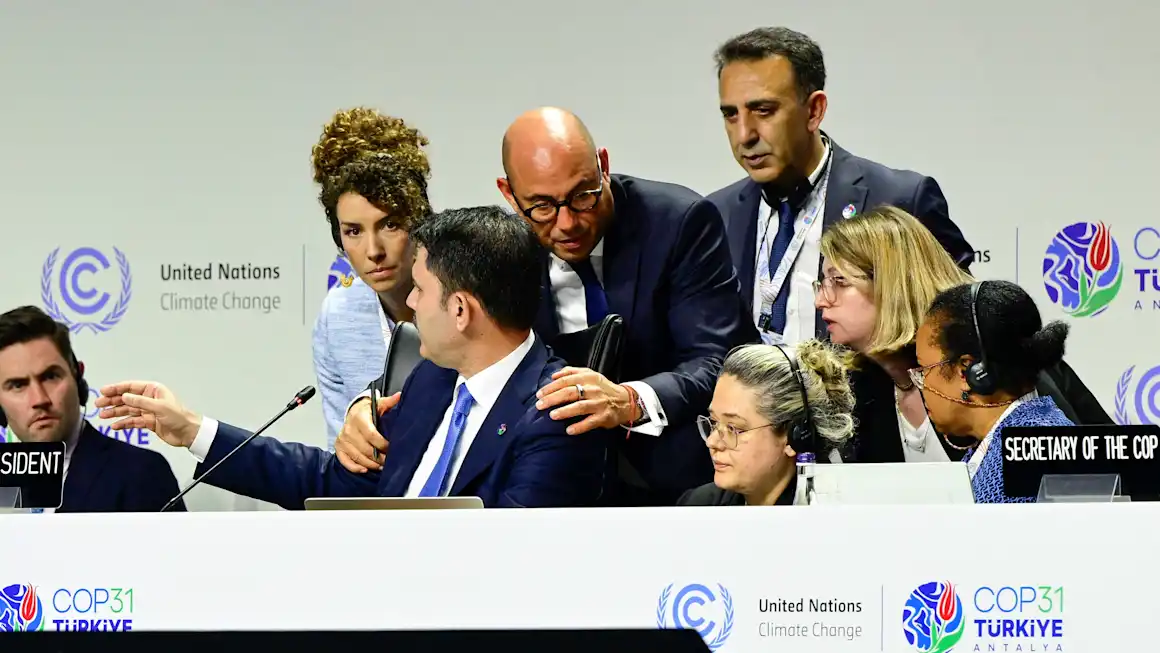
A Deadlock Over Transition Language
International climate negotiations have concluded in a state of stalemate, exposing deep-seated geopolitical fractures that threaten global efforts to curb carbon emissions. The talks, which were intended to solidify commitments under the Paris Agreement, ended without a final accord after a contentious stand-off over the specific wording regarding fossil fuels. The primary obstacle was a fundamental disagreement between the European Union-led coalition, which pushed for explicit language on phasing out fossil fuels, and the Arab Group, which successfully resisted any binding commitments that would mandate a transition away from hydrocarbons.
The failure to reach a consensus highlights the growing difficulty of achieving multilateral agreement on climate policy as national economic interests increasingly clash with environmental imperatives. For the first time in recent summit history, the inability to bridge the gap between developed nations advocating for rapid decarbonization and oil-exporting nations protecting their primary revenue streams resulted in a complete collapse of the negotiation process. This outcome underscores the fragility of the current international climate framework and raises questions about the enforceability of future targets.
The Arab Group vs. The EU Coalition
At the heart of the dispute was the proposed text for the final declaration. The EU-led coalition, representing a bloc of nations with aggressive net-zero targets, insisted on including a clause that called for the phase-out of fossil fuels. This language was seen by environmental advocates and EU officials as a necessary step to limit global warming to 1.5 degrees Celsius. In contrast, the Arab Group, comprising major oil and gas producers, argued that such language was discriminatory and ignored the role of natural gas as a transition fuel. They demanded that the text emphasize the development of renewable energy without explicitly condemning fossil fuels.
Despite extensive behind-the-scenes diplomacy and late-night sessions, the two blocs remained entrenched in their positions. The Arab Group leveraged its collective influence to block the proposed amendments, citing the need for energy security and economic stability for developing nations dependent on hydrocarbon exports. The EU coalition, while expressing disappointment, acknowledged the political realities that prevented a unified front. The stand-off effectively paralyzed the negotiating committee, leaving key sections of the draft agreement unresolved and unadopted.
Observers note that this fracture is not merely a procedural dispute but a reflection of broader geopolitical shifts. As the global economy grapples with inflation, supply chain disruptions, and energy security concerns following recent global conflicts, the urgency of climate action has been complicated by immediate economic pressures. Oil-exporting nations argue that they cannot sacrifice their economic lifelines without guarantees of financial support and technology transfer from wealthier nations, a demand that has yet to be fully met by the international community.
Implications for Future Climate Action
The collapse of the talks sends a sobering message to investors and policymakers alike. Without a clear, unified international directive, the path to decarbonization becomes fragmented, with individual nations and regions pursuing divergent strategies. This lack of global coordination could lead to a patchwork of regulations, potentially creating market inefficiencies and increasing the cost of capital for green projects in some jurisdictions while leaving others behind. The absence of a binding agreement also means that the current trajectory of global emissions is unlikely to change significantly in the near term.
Market analysts suggest that this geopolitical uncertainty may continue to weigh on the clean energy sector. While long-term trends favor renewable energy adoption, short-term volatility is likely to persist as political risks remain elevated. Investors are advised to monitor how individual nations respond to the diplomatic failure, as domestic policies may diverge sharply from the stalled international consensus. The failure to agree on fossil fuel phase-out language also raises concerns about the adequacy of current climate finance mechanisms, which are critical for supporting developing nations in their transition to green economies.
Key takeaways
- Climate negotiations have ended without a final agreement due to a stand-off over fossil fuel language.
- A sharp divide emerged between an EU-led coalition pushing for a phase-out and the Arab Group resisting it.
- The Arab Group successfully blocked language mandating the transition away from hydrocarbons.
- The collapse exposes deep geopolitical fractures and complicates global carbon reduction efforts.
- Future climate action may become fragmented as nations pursue divergent domestic strategies.





