A New Geopolitical Alignment?
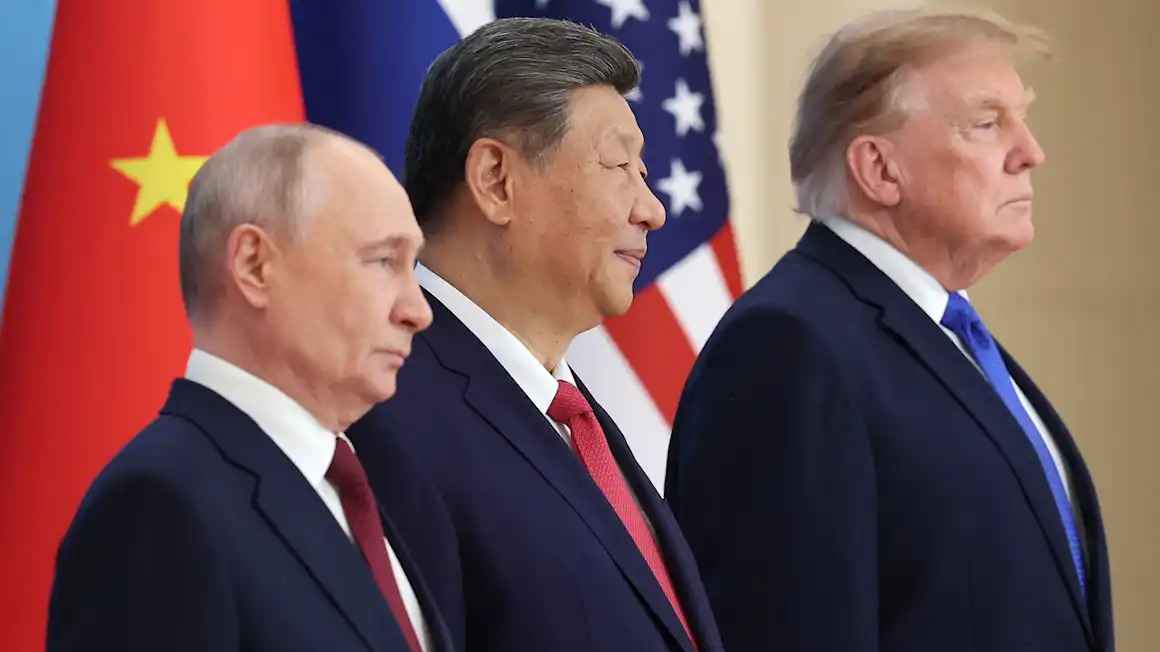
A recent analysis suggests that a proposed trilateral summit involving Chinese President Xi Jinping, U.S. President Donald Trump, and Russian President Vladimir Putin could fundamentally reshape international relations. According to various analysts, this diplomatic configuration projects Beijing’s emerging role as a central leader in global affairs. The concept has been characterized by commentators as a 'Yalta 2.0' moment, drawing parallels to the 1945 conference that divided Europe into spheres of influence among the Allied powers.
The term 'Yalta 2.0' implies a significant shift in the multipolar world order, where major powers negotiate global security and economic frameworks directly. This perspective highlights China's ambition to move beyond its traditional role as a participant in international institutions and instead position itself as a primary architect of global policy. The summit, if it proceeds, would mark a high-level convergence of three of the world's most powerful military and economic forces.
Strategic Implications for Global Leadership
Analysts argue that the inclusion of all three leaders in a single diplomatic forum underscores the changing dynamics of the current geopolitical landscape. The projection of global leadership by Beijing is seen as a response to the evolving relationship between Washington and Moscow. By facilitating or participating in such a high-stakes dialogue, China aims to demonstrate its capacity to influence outcomes in regions and sectors previously dominated by Western-led coalitions.
The 'Yalta 2.0' analogy specifically points to the potential for a new era of great power competition and cooperation. Just as the original Yalta conference set the stage for the post-World War II order, this hypothetical summit could establish the rules for a post-pandemic, multi-polar world. The presence of Trump, Xi, and Putin together would signal that these nations are willing to engage in direct bilateral and trilateral negotiations to resolve outstanding international disputes.
However, the term also carries historical weight, reminding observers of the secretive and top-down nature of mid-20th-century diplomacy. Critics might argue that such a format marginalizes smaller nations and international organizations like the United Nations. Nevertheless, for Beijing, the opportunity to sit at the table with its two primary strategic counterparts is viewed as a significant diplomatic achievement. It validates China's status as a peer to the United States and Russia in terms of global influence.
What Happens Next
The discussion around this trilateral summit reflects broader trends in international diplomacy where traditional alliances are being tested. The 'Yalta 2.0' narrative suggests that the world is moving away from a unipolar order led solely by the United States toward a system where multiple centers of power must negotiate directly. For China, this represents a chance to solidify its role as a stabilizing force or, alternatively, a co-architect of a new international system that better reflects its economic and political weight.
As the geopolitical landscape continues to evolve, the potential for such high-level summits remains a topic of intense speculation among policy experts. The focus will likely remain on how these three nations manage their bilateral tensions while engaging in broader multilateral dialogue. The outcome of any such engagement could have far-reaching consequences for global trade, security alliances, and technological standards.
Key takeaways
- A proposed trilateral summit between Xi Jinping, Donald Trump, and Vladimir Putin is being analyzed by experts.
- Analysts describe the potential meeting as a 'Yalta 2.0' moment, drawing historical parallels to post-WWII diplomacy.
- The summit is viewed as a projection of Beijing's growing role in global leadership and international mediation.
- The concept highlights a shift toward a multipolar world order where major powers negotiate directly.
- China's participation in such a high-level forum underscores its ambition to shape global policy frameworks.





