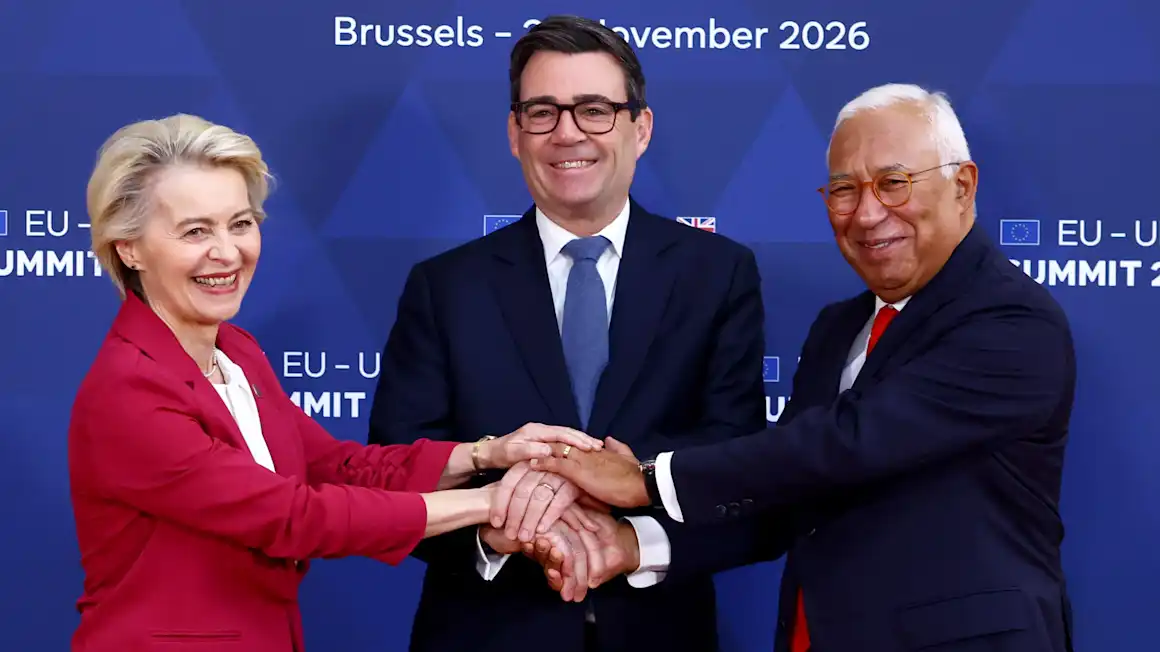
A Definitive Trade Framework
The United Kingdom and the European Union have successfully concluded negotiations on a new trade agreement, bringing an end to a prolonged period of uncertainty that has characterized post-Brexit relations. This deal establishes a structured framework for future economic interactions, aiming to reduce friction in cross-border commerce and set clear rules for both parties. The agreement addresses critical areas of trade, including tariffs, regulatory standards, and dispute resolution mechanisms, providing a stable platform for businesses on both sides of the channel to operate with greater predictability.
Prime Minister Burnham has publicly characterized this Friday’s agreement as more than just a transactional compromise. In his assessment, the deal represents the initial phase of a much closer post-Brexit relationship between the UK and the EU. This perspective suggests that the current arrangement is not a static endpoint but rather a foundational document intended to facilitate deeper integration in specific sectors over time. The Prime Minister’s stance indicates a strategic shift towards rebuilding trust and fostering cooperation after years of diplomatic tension.
The negotiations leading up to this agreement were complex, involving intricate discussions on fishery rights, financial services equivalence, and security cooperation. The final text of the deal aims to balance the UK’s desire for regulatory autonomy with the EU’s insistence on a level playing field. Key provisions include streamlined customs procedures for low-risk goods and enhanced cooperation on research and innovation projects, which are seen as vital for maintaining competitiveness in a global economy.
Market reactions to the announcement have been measured, with investors focusing on the long-term implications rather than immediate volatility. The clarity provided by the agreement is expected to reduce the risk premium associated with UK-EU trade, potentially lowering costs for businesses that rely on cross-supply chains. However, analysts note that the full economic impact will only become apparent as the details of implementation are rolled out in the coming months.
Implications for Future Cooperation
The Prime Minister’s vision of a closer relationship hinges on the successful implementation of this initial deal. Burnham has emphasized that the agreement is a "first step," implying that subsequent negotiations will likely focus on expanding cooperation into new areas such as digital trade, green energy, and labor mobility. This forward-looking approach aims to transform the post-Brexit dynamic from one of separation to one of selective partnership.
For businesses, the agreement offers a degree of certainty that has been lacking since the Brexit referendum. The clarity on regulatory alignment in key sectors allows companies to plan investments with greater confidence. However, the devil remains in the details, and industry groups are closely monitoring the technical annexes of the deal to ensure that their specific interests are protected. The success of this relationship will depend on the willingness of both sides to engage in constructive dialogue as new challenges arise.
The political landscape in both the UK and the EU will play a crucial role in the evolution of this relationship. Domestic pressures may influence how aggressively either side pursues deeper integration. For the UK government, delivering on the promise of a closer tie could bolster its standing domestically, while for the EU, maintaining unity among member states while engaging with the UK requires careful diplomatic management.
Looking Ahead
As the dust settles on this historic agreement, the focus now shifts to execution. Both governments must navigate the technical complexities of implementing the new trade rules while managing public expectations. The coming months will be critical in determining whether this deal serves as a springboard for a renewed era of UK-EU cooperation or remains a standalone milestone in a gradually drifting apart relationship.
Key takeaways
- The UK and EU have finalized a new trade agreement to structure post-Brexit economic relations.
- Prime Minister Burnham describes the deal as the first step toward a closer post-Brexit partnership.
- The agreement aims to reduce trade friction and provide regulatory clarity for businesses.
- Future cooperation may expand into areas like digital trade and green energy based on the Prime Minister's vision.
- Market reactions have been measured, focusing on long-term stability and reduced risk premiums.





