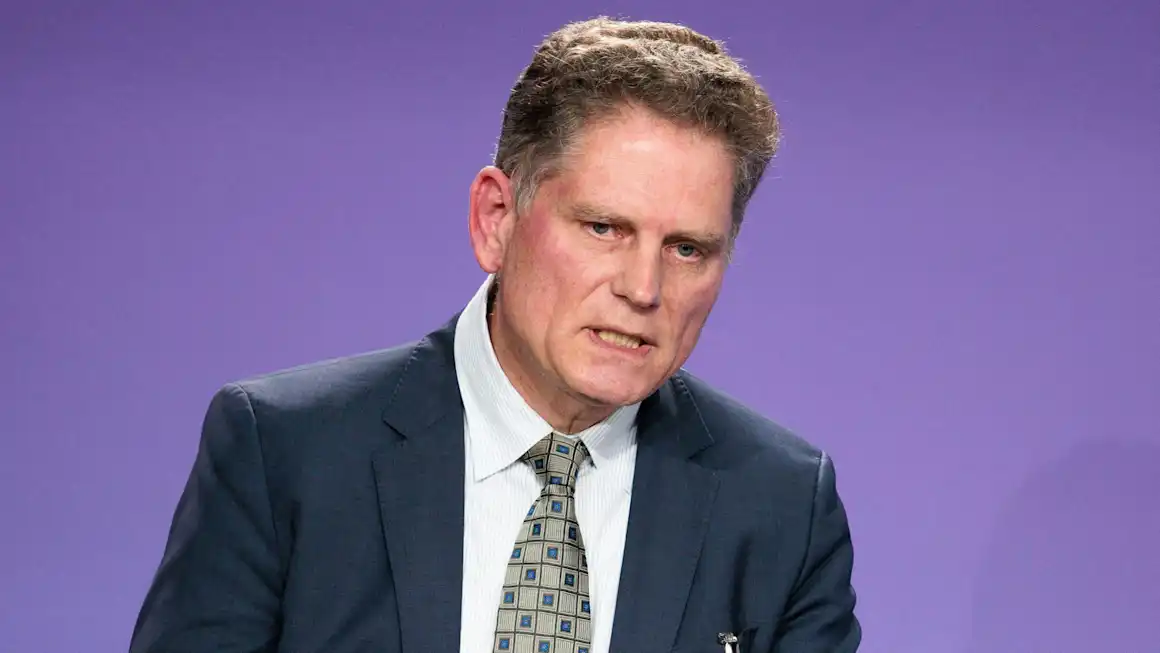
Germany's Strategic Nomination
The German government has officially selected Markus Brunnermeier as its candidate for a vacant seat on the executive board of the European Central Bank (ECB). This nomination represents a significant diplomatic and economic maneuver within the Eurozone, aligning Berlin's choice with a broader bilateral understanding between France and Spain. The selection of Brunnermeier, a prominent economist with deep expertise in monetary policy and global finance, signals Germany's continued influence over the institution's highest levels of governance.
Brunnermeier's appointment is not an isolated event but rather a component of a larger political framework. By nominating him, Germany is fulfilling its part of a delicate power-sharing arrangement designed to balance the interests of the Eurozone's largest economies. This move paves the way for the next phase of the agreement, which involves the leadership structure of the ECB presidency, further demonstrating how national political priorities are intertwined with supranational financial oversight.
The Franco-Spanish Presidency Agreement
The core of this development lies in a consolidated deal between France and Spain regarding the future presidency of the European Central Bank. Under this arrangement, Spain’s Pablo Hernández de Cos is positioned to lead the central bank. The nomination of Brunnermeier by Germany serves to validate and secure this Spanish appointment, ensuring that the executive board's composition reflects a balanced representation of key member states.
This agreement underscores the collaborative nature of Eurozone governance, where major appointments are often the result of intricate negotiations rather than unilateral decisions. By securing Brunnermeier's nomination, Germany helps to lock in the deal that places Hernández de Cos in the presidential role. This structure ensures that the economic policies of the ECB are shaped by a coalition of major European powers, maintaining stability and consensus within the monetary union.
Implications for Monetary Policy and Governance
The appointment of Brunnermeier to the executive board brings a renowned academic and policy expert into the heart of European financial regulation. His background suggests a focus on rigorous economic analysis and the stabilization of the banking sector, areas critical to the ECB's mandate. His presence on the board will likely influence discussions on interest rates, quantitative easing, and regulatory frameworks for financial institutions across the Eurozone.
Simultaneously, the elevation of Pablo Hernández de Cos to the presidency marks a shift in the leadership dynamics of the ECB. As the head of the central bank, he will play a pivotal role in setting the strategic direction for monetary policy in Europe. The coordination between Germany's nominee on the board and Spain's nominee at the top of the institution highlights the importance of inter-governmental cooperation in managing the bloc's economic future. This alignment aims to present a unified front in addressing inflation, growth, and financial stability challenges.
Next Steps and Ratification
Following the German nomination, the process for Brunnermeier's appointment must proceed through the standard institutional channels of the European Union. This typically involves scrutiny by the European Parliament and formal approval by the Eurogroup, the council of finance ministers of the euro area countries. The success of his confirmation is largely seen as contingent upon the broader political stability provided by the Franco-Spanish agreement, ensuring that the executive board is filled in a manner that satisfies the major power brokers of the Eurozone.
The consolidation of this deal between France, Germany, and Spain removes a significant layer of uncertainty regarding the ECB's leadership. It allows the institution to move forward with a clear executive team, capable of implementing policy without the distraction of protracted negotiations over personnel. The focus now shifts to how Brunnermeier and Hernández de Cos will collaborate to navigate the complex economic landscape of Europe, balancing national interests with the collective needs of the monetary union.
Key takeaways
- Germany has nominated economist Markus Brunnermeier for a seat on the ECB executive board.
- This nomination is part of a consolidated deal between France and Spain regarding ECB leadership.
- Spain’s Pablo Hernández de Cos is positioned to lead the central bank as part of the agreement.
- The arrangement strengthens political coordination among the Eurozone's major economies.
- Brunnermeier's appointment paves the way for the formalization of the Franco-Spanish presidency deal.





