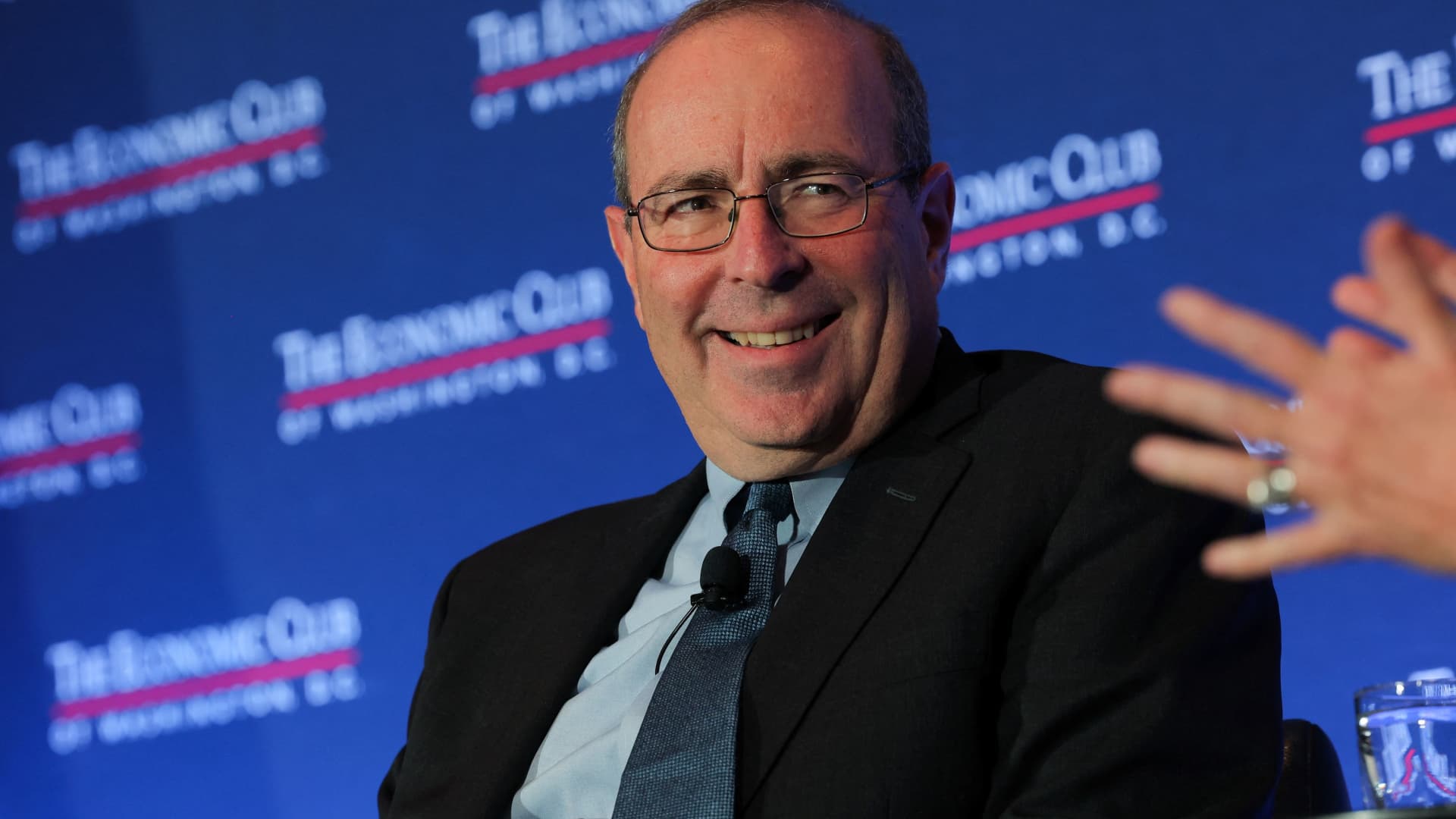
Monetary Policy Adjustments on the Horizon
In a recent interview with CNBC, Federal Reserve Governor Philip Barkin addressed the current economic landscape, explicitly stating his concern over persistent inflationary pressures. The policymaker emphasized that the central bank's monetary policy framework will require adjustment to effectively address these economic challenges. This statement marks a significant shift in tone, suggesting that the Federal Reserve is moving from a period of observation to one of active intervention regarding interest rates.
Barkin’s comments highlight the growing consensus among Fed officials that the current economic environment necessitates a response. The mention of needed adjustments in monetary policy indicates that the central bank is preparing to tighten financial conditions. This move is intended to cool down an overheating economy and stabilize prices, which have been volatile in recent months due to various global and domestic factors.
The governor did not specify the exact magnitude of the upcoming rate changes, but he characterized the approach as gradual. This suggests that the Federal Reserve aims to avoid shocking the financial markets or causing unnecessary disruption to economic growth. A gradual pace allows businesses and consumers to adjust to higher borrowing costs over time, potentially mitigating the risk of a sharp economic contraction.
Inflation as the Primary Catalyst
Central to Barkin’s argument is the issue of inflation, which remains a primary concern for policymakers across the globe. The reference to concern over inflation underscores the Federal Reserve's dual mandate of maximizing employment and stabilizing prices. By identifying inflation as a key driver for policy change, Barkin reinforces the central bank's commitment to maintaining price stability as a cornerstone of long-term economic health.
The need for monetary policy to adjust is directly linked to the trajectory of inflation data. As prices for goods and services continue to rise, the purchasing power of the dollar diminishes, affecting everyone from individual consumers to large corporations. The Federal Reserve's tools, primarily interest rate adjustments, are designed to influence borrowing and spending behaviors, thereby exerting downward pressure on inflation.
Barkin’s interview serves as a clear signal to financial markets that the era of easy money may be coming to an end. Investors and analysts are now recalibrating their expectations for future rate hikes. The emphasis on a gradual pace provides some reassurance that the Fed is aware of the potential risks associated with aggressive tightening, aiming for a soft landing rather than a hard stop.
Implications for Financial Markets
The announcement of impending rate hikes, even at a gradual pace, has immediate implications for various asset classes. Bond yields are likely to rise as investors price in higher interest rates, which can lead to a decline in bond prices. Equities may also face pressure, particularly in sectors that are sensitive to borrowing costs, such as technology and real estate.
For the broader economy, the gradual increase in interest rates is intended to slow down demand sufficiently to bring inflation under control without triggering a recession. This delicate balance is the central challenge for the Federal Reserve. Barkin’s comments suggest that the central bank is prepared to navigate this challenge with caution, prioritizing stability over rapid action.
As the Federal Reserve moves forward with these policy adjustments, market participants will be closely watching subsequent statements and economic data releases. The pace and magnitude of future rate hikes will depend on incoming inflation reports, employment data, and other economic indicators. Barkin’s interview provides a roadmap for what to expect in the near term, setting the stage for a period of heightened monetary policy activity.
Key takeaways
- Federal Reserve Governor Philip Barkin expressed concern over inflation in a CNBC interview.
- Barkin stated that monetary policy will need to adjust to address current economic conditions.
- The policymaker indicated that interest rate hikes are expected to proceed at a gradual pace.
- The adjustment in policy aims to stabilize prices while avoiding market disruption.





