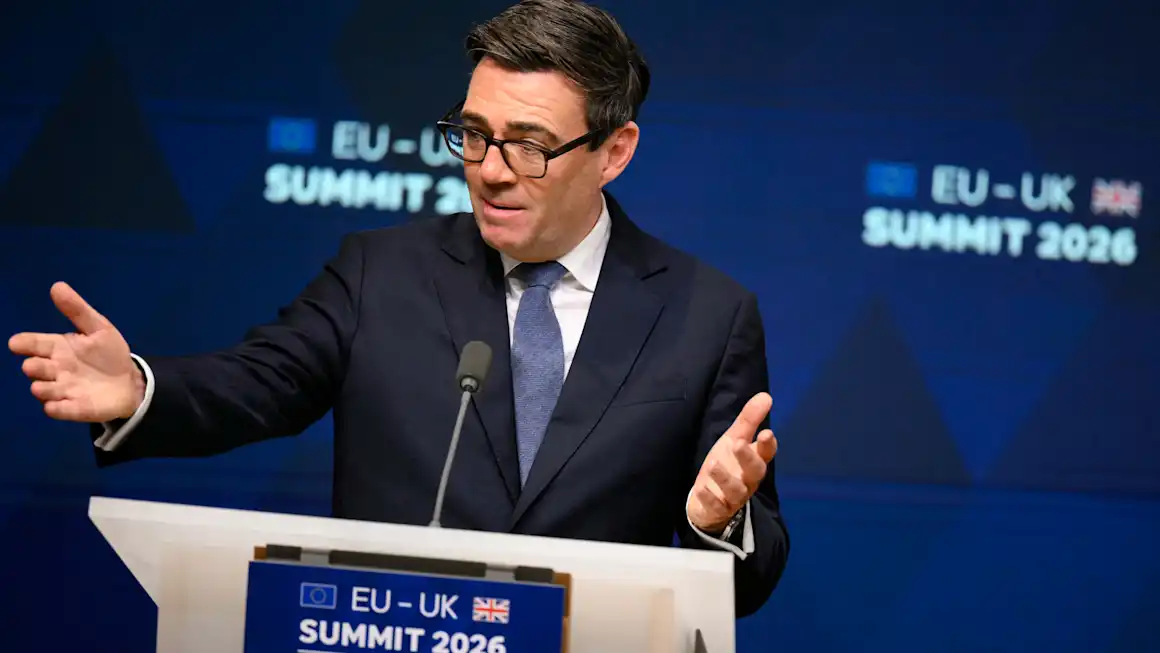
A Landmark Agreement in Brussels
Andy Burnham, the Mayor of Greater Manchester, has initiated a significant diplomatic effort to reshape the post-Brexit relationship between the United Kingdom and the European Union. The cornerstone of this effort is a landmark agreement secured with Brussels, which aims to mitigate some of the economic and operational frictions that have arisen since the UK's departure from the EU bloc. This development represents a tangible step towards re-integrating regional economies that have faced new barriers to trade and collaboration.
The agreement is being characterized by observers as a critical move to "undo" some of the isolationist effects of Brexit at a local and regional level. By forging this direct line of communication and cooperation with EU counterparts, Burnham is attempting to create a framework that allows for smoother economic exchanges, potentially benefiting businesses and investors in the North of England. The deal signifies a pragmatic approach to navigating the complexities of the new political landscape, focusing on practical benefits rather than ideological debates.
Domestic Disputes Overshadow Progress
Despite the diplomatic breakthrough, the announcement and implementation of the EU deal are being overshadowed by ongoing domestic political disputes. Central to this controversy is the contentious issue of university fees, which has become a flashpoint in broader discussions about the UK's internal economic policy. The dispute highlights the divergent priorities between regional leaders seeking international cooperation and the central government grappling with internal fiscal pressures.
The tension regarding university fees serves as a microcosm of the larger challenge facing the UK: balancing international engagement with domestic stability. While Burnham’s team focuses on the tangible gains of the Brussels agreement, critics and political opponents are pointing to the unresolved issues at home. This dichotomy creates a complex narrative for investors and policymakers, who must assess how internal political friction might impact the long-term viability of such regional trade deals.
The overlap of these issues suggests that the path forward is not solely defined by international relations but is deeply intertwined with the UK's internal political health. The university fee dispute has drawn significant attention from the media and political stakeholders, potentially diverting focus from the economic benefits of the EU deal. This dynamic underscores the difficulty of maintaining a coherent economic strategy when internal political consensus is lacking.
Uncertainty in the Relationship’s Future
Beyond the immediate controversy, there are lingering questions about the direction and sustainability of the UK-EU relationship. The Brussels agreement, while significant, does not resolve the fundamental uncertainties that have persisted since Brexit. Stakeholders are left wondering where the relationship is headed and whether such local agreements can scale to influence national policy or if they remain isolated exceptions.
The future of the UK-EU relationship remains a subject of intense speculation. The landmark deal with Manchester provides a template for regional cooperation, but its long-term impact depends on how it interacts with broader national strategies. The lack of clarity on the next steps for the relationship adds a layer of risk for those involved in cross-border trade and investment. Investors are closely watching how these developments unfold, as the stability of the UK's external economic ties is crucial for market confidence.
As the dust settles on the announcement, the focus shifts to the implementation phase. The success of the agreement will be measured not just by its signing but by its practical application and the extent to it can withstand political headwinds. The interplay between Burnham’s diplomatic efforts and the ongoing domestic disputes will likely define the narrative for the coming months, determining whether this deal is a stepping stone or a isolated event in the post-Brexit era.
Key takeaways
- Andy Burnham has secured a landmark agreement with Brussels to improve post-Brexit regional ties.
- The deal is currently overshadowed by domestic disputes, particularly regarding university fees.
- Questions remain about the long-term direction and stability of the UK-EU relationship.
- The agreement highlights a pragmatic approach to mitigating Brexit-related economic friction.
- Internal political tensions may impact the broader implementation and perception of the deal.





